
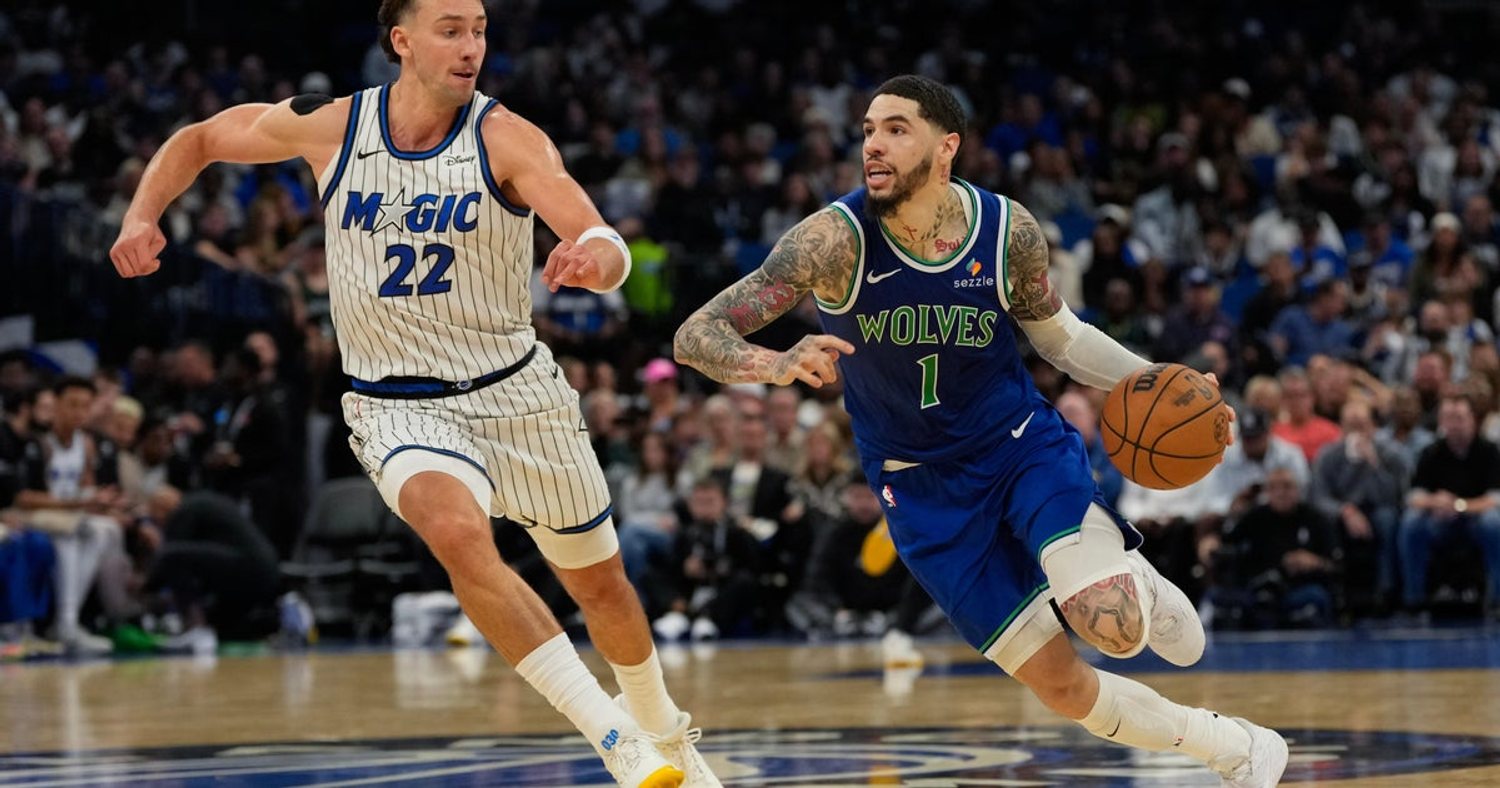
LaMelo Ball should have a nearby passing option every time the Timberwolves ask him to attack Toronto on Sunday. I want Minnesota to make the Raptors defend the next receiver, instead of asking Ball to solve every possession with a dribble or a pass across the floor. Short, early passes should be the foundation of the home opener.
Toronto supplied the reason on Friday. The Raptors beat Washington 112-102, and the Basketball Reference box score credits the Wizards with 23 turnovers and Toronto with 12 steals. Minnesota should keep its ambition with the ball. Chris Finch should also give that ambition somewhere safe to go when a second defender arrives.
Toronto can win without making its threes
The Raptors made seven of 34 three-point attempts in Washington, according to Basketball Reference. That is 20.6%, yet they still won by 10. Hoping Toronto misses from outside is a thin plan when the Raptors have just shown they can survive that kind of shooting night.
They also collected 19 offensive rebounds, per the same box score. Put those recoveries beside the Washington turnovers and the challenge becomes clearer: Minnesota has to finish its defensive possessions and give its own offense a chance to reach a shot. A bad pass can erase the benefit of good work at the other end.
The steals came from several places. Basketball Reference credits Kawhi Leonard and Collin Murray-Boyles with three apiece and Ja’Kobe Walter with two. I would prepare for disruptive hands throughout the game, including the minutes when the teams turn to their benches. Protecting the ball cannot be an assignment that ends when the first substitution comes.
Those numbers do not tell us which coverage Toronto will choose against Ball. They do tell me what I want Minnesota to emphasize in its preparation. Have the next pass available before the ball handler runs out of space. Make Toronto earn a stop after the ball leaves his hands.
Give Ball a receiver he can actually reach
My preferred opening action is Ball using a Rudy Gobert screen with a teammate available on the near side. If Toronto sends another defender toward Ball, he should have a short release pass. If the defense stays home, he should keep attacking. The purpose is to preserve his choices as the possession develops.
That requires work from the players without the ball. I want the nearest wing moving into Ball’s view, with enough separation from Gobert to avoid putting both receivers in the same passing lane. A stationary teammate behind a defender offers little help, even if the spacing looks tidy before the action begins.
Gobert should remain a scoring target. He made six of eight field-goal attempts in Orlando, per Basketball Reference. Minnesota should keep looking for him when he has room to finish. Forcing a pass through a defender just to involve him would defeat the purpose.
There is more on that partnership in our analysis of Ball’s ability to create finishes for Gobert. Sunday’s assignment is narrower: keep the first pass manageable, then let the receiver decide whether the finish or the next pass is available. I would take a clean continuation over an attempted highlight that never reaches a teammate.
Edwards can help before he gets the ball
Ball shot four of 13 and committed three turnovers in Orlando, according to Basketball Reference. Anthony Edwards went five of 23. Minnesota won anyway, but I would not build Sunday’s offense around the assumption that the starting guards will suddenly make difficult shots.
I want Edwards involved in the escape route when Toronto commits help to Ball. A catch with a defender moving toward him gives Edwards a decision he can make immediately: shoot, drive or move the ball again. Holding him far from the action while Ball searches for an opening risks wasting the value of having both guards on the floor.
That is why I still like playing Edwards and Ball together. My preference is to use their shared minutes to make the defense change assignments within a possession. The pass should put the next player in position to attack, with teammates already moving to support him.
The same expectation should follow the reserves. Ayo Dosunmu scored 14 points on six of 11 shooting in Orlando, per Basketball Reference. I want him ready to receive and attack when Ball draws attention, rather than watching the possession from the opposite side. The full Wolves roster and depth chart lays out Finch’s choices around the guards. Whoever gets those minutes should supply a passing angle as well as a scoring threat.
Keep the attack, shorten the difficult decisions
Sunday’s home opener is scheduled for 6 p.m. Central, according to Basketball Reference’s Minnesota schedule, which lists the game at 7 p.m. Eastern. The Wolves then travel to Cleveland for Monday’s game. I would use the Toronto matchup to demand decisions the offense can carry into that next stop, regardless of whether the jumpers fall.
That means accepting some risk. Ball should still throw the pass over the defense when the lane is open. Edwards should still attack a defender who has lost his balance. An offense afraid of every turnover would give away too much of what makes those players valuable.
My demand is for better support around those decisions. When Toronto crowds the ball, the closest Wolf should be helping the possession continue. Give Ball a short pass he can see, make the next defender move, and let the difficult shot be the last resort.