
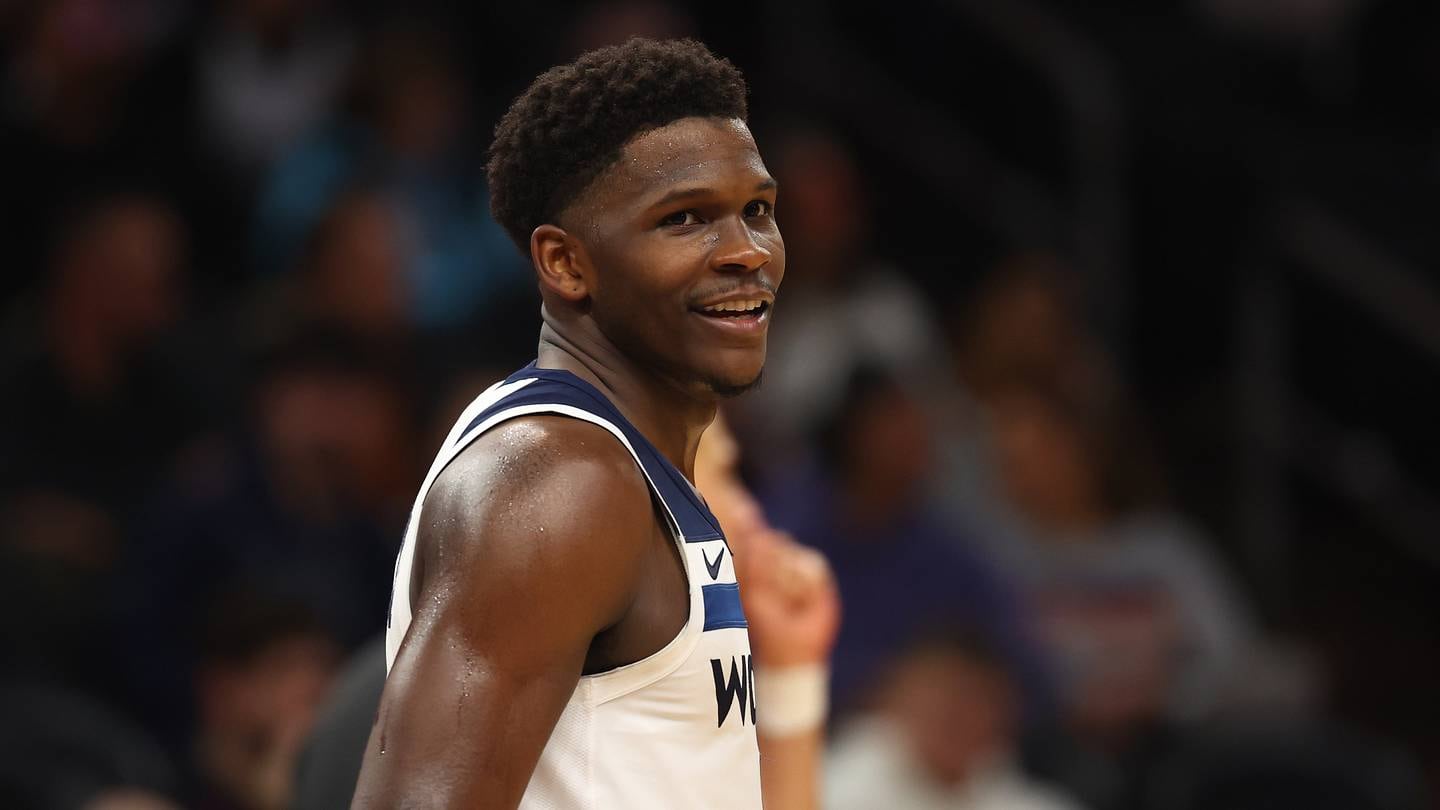
This is the roster the Timberwolves take into training camp next week, and it does not look much like the one that lost to San Antonio in the second round. LaMelo Ball is here. Jonathan Kuminga signed. Naz Reid, Julius Randle, Mike Conley and Kyle Anderson are gone. Donte DiVincenzo is still working back from a torn Achilles.
Below is everything you need in one place: the projected starting five, the depth chart by position, every contract on the books this season and the camp invites fighting for a spot. I’ll keep this page updated as moves happen, so bookmark it. And if you want to know what to listen for before camp opens, here are the five questions the Wolves need answered at media day.
Projected starting five
These are my projections, not a lineup the team has announced. Chris Finch hasn’t named his starters, and one spot is a real debate.
| Pos | Player | Ht | 2025-26 |
|---|---|---|---|
| PG | LaMelo Ball | 6‑7 | 20.1 pts, 7.1 ast (Charlotte) |
| SG | Anthony Edwards | 6‑4 | 28.8 pts, 5.0 reb, 3.7 ast |
| SF | Jaden McDaniels | 6‑9 | 14.8 pts, 41.2% from three |
| PF | Jonathan Kuminga | 6‑7 | 12.2 pts, 5.6 reb (Golden State and Atlanta) |
| C | Rudy Gobert | 7‑1 | 10.9 pts, 11.5 reb, 1.6 blk |
Stats are 2025-26 per-game numbers from Basketball Reference.
The fourth spot is the one to watch. Kuminga keeps the lineup big. Ayo Dosunmu, who shot 43.9% from three last season, makes it a better shooting group. I think Kuminga should get it, and I made the full case here.
Depth chart by position
| Position | Starter | Rotation | Depth |
|---|---|---|---|
| Point guard | LaMelo Ball | Ayo Dosunmu | Bones Hyland |
| Shooting guard | Anthony Edwards | Jaylen Clark | Terrence Shannon Jr., Isaiah Evans |
| Small forward | Jaden McDaniels | Cody Williams | |
| Power forward | Jonathan Kuminga | Trey Lyles | Enrique Freeman (two-way) |
| Center | Rudy Gobert | Joan Beringer | Rocco Zikarsky (two-way) |
Injured: Donte DiVincenzo (right Achilles, torn in Game 4 of the first round on April 25). General manager Matt Lloyd declined to give a return timeline on September 4, per NBC Sports. I’m planning around him missing most of the year.
The thin spot is obvious. Reid was the backup center and Randle soaked up frontcourt minutes, and both left in the Ball trade. Behind Gobert there’s Beringer, who played 40 games as a rookie at 7.9 minutes a night, and Lyles on a one-year minimum deal. Expect Kuminga to slide to center in smaller lineups.
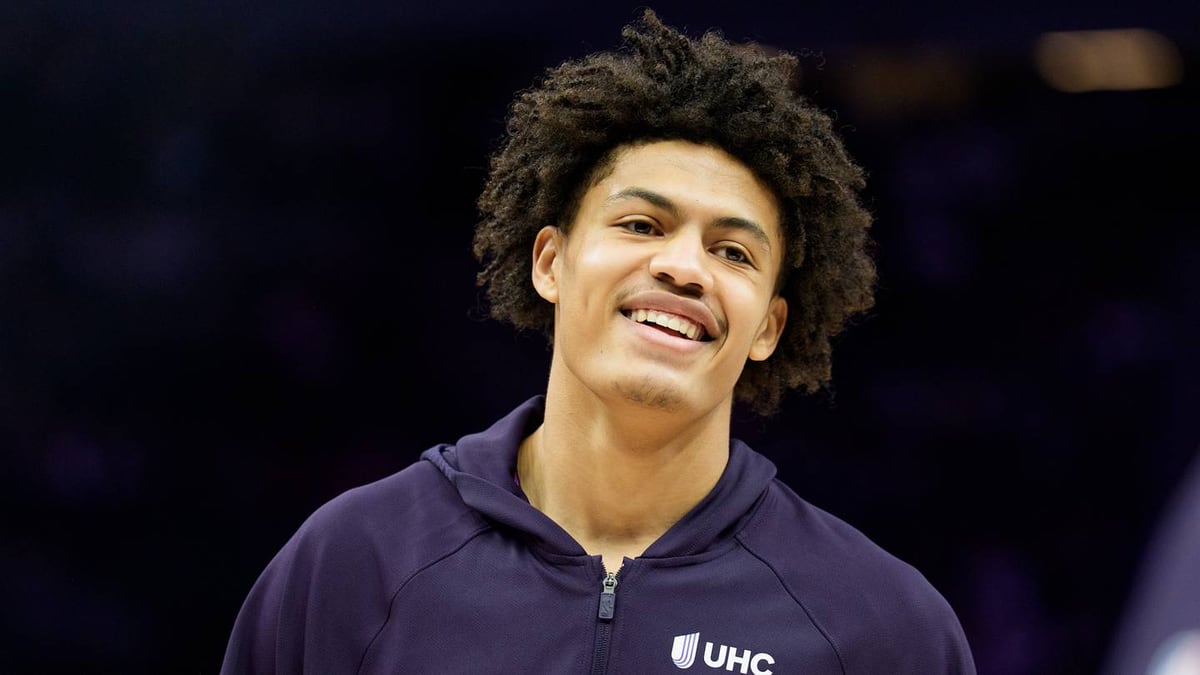
2026-27 contracts
Every standard contract on the roster, with this season’s salary and next season’s where one exists. Figures are from Basketball Reference’s contract page.
| Player | Age | 2026-27 | 2027-28 |
|---|---|---|---|
| Anthony Edwards | 25 | $48.9M | $52.3M |
| LaMelo Ball | 25 | $40.8M | $43.6M |
| Rudy Gobert | 34 | $36.5M | $38.0M (player option) |
| Jaden McDaniels | 25 | $26.2M | $28.0M |
| Ayo Dosunmu | 26 | $19.3M | $20.9M |
| Donte DiVincenzo | 29 | $12.5M | Free agent |
| Jonathan Kuminga | 23 | $6.1M | $6.4M (player option) |
| Cody Williams | 21 | $6.0M | $7.7M |
| Joan Beringer | 19 | $4.4M | $4.6M |
| Jaylen Clark | 24 | $3.1M | $3.3M |
| Bones Hyland | 26 | $2.8M | Free agent |
| Terrence Shannon Jr. | 26 | $2.8M | $5.1M |
| Trey Lyles | 30 | $2.4M | Free agent |
| Isaiah Evans | 20 | $1.4M | $2.3M |
That’s $215.3 million in salary for 14 players. Minnesota is over the first apron and about $4.5 million under the second, and it’s hard-capped at the second apron. In practice that means the 15th roster spot can only go to a player on a minimum deal. A payroll that size is also a big reason ownership is pushing for a new, higher-revenue arena.
A few contracts matter more than their size. Gobert’s player option means he can opt out next summer, and he becomes eligible for an extension after opening night. Kuminga signed for two years with an option on the second, so this is a prove-it season for him too. Edwards has three years left, and an All-NBA season would put him on track for a super-max extension.
Two-way deals and camp invites
Three players are on two-way contracts: Enrique Freeman, a 6-9 forward, plus Rocco Zikarsky and Zyon Pullin, who both carried over from last season.
Two more are in camp on non-guaranteed deals. Jules Bernard signed in the summer. Nate Santos agreed to a training camp deal on September 23 after playing 27 games for the G League’s Iowa Wolves last season, where he averaged 10.6 points in 24.8 minutes. Both are most likely headed to Iowa, but camp deals are how players get a look when injuries hit.
How the roster changed
The big move was the four-team trade for Ball. Minnesota sent out Reid, Randle, the draft rights to the No. 28 pick, a 2033 first-round pick, three second-rounders and three pick swaps, and got Ball, Josh Green and the No. 33 pick, which became Isaiah Evans. Green was then flipped to Utah with cash for Cody Williams and John Konchar, and Konchar was waived.
Dosunmu re-signed for five years and $112 million after coming over from Chicago at the deadline. Kuminga signed for two years and about $12.4 million. Jaylen Clark got a three-year deal, and Bones Hyland and Trey Lyles came back on one-year minimums.
Gone: Reid, Randle, Conley, Anderson, Joe Ingles and Julian Phillips.
The team will look different too. Here’s every new Wolves uniform and court for 2026-27.
What I’m watching in camp
The shooting math is the first thing. Ball took 10.3 threes a game in Charlotte and made 36.8%. McDaniels hit 41.2%. Dosunmu hit 43.9%. Whoever starts at the four changes how much room Edwards and Ball have to work with.
Second, the backup center job. If Beringer can hold up for 15 to 18 minutes a night, Minnesota’s frontcourt problem gets a lot smaller. If he can’t, expect a lot of Kuminga at center and a minimum signing before long.
Third, who closes games. The starting five matters for the first six minutes. The closing five decides how far this team goes, and that’s the lineup I’ll be tracking all season on this page.