
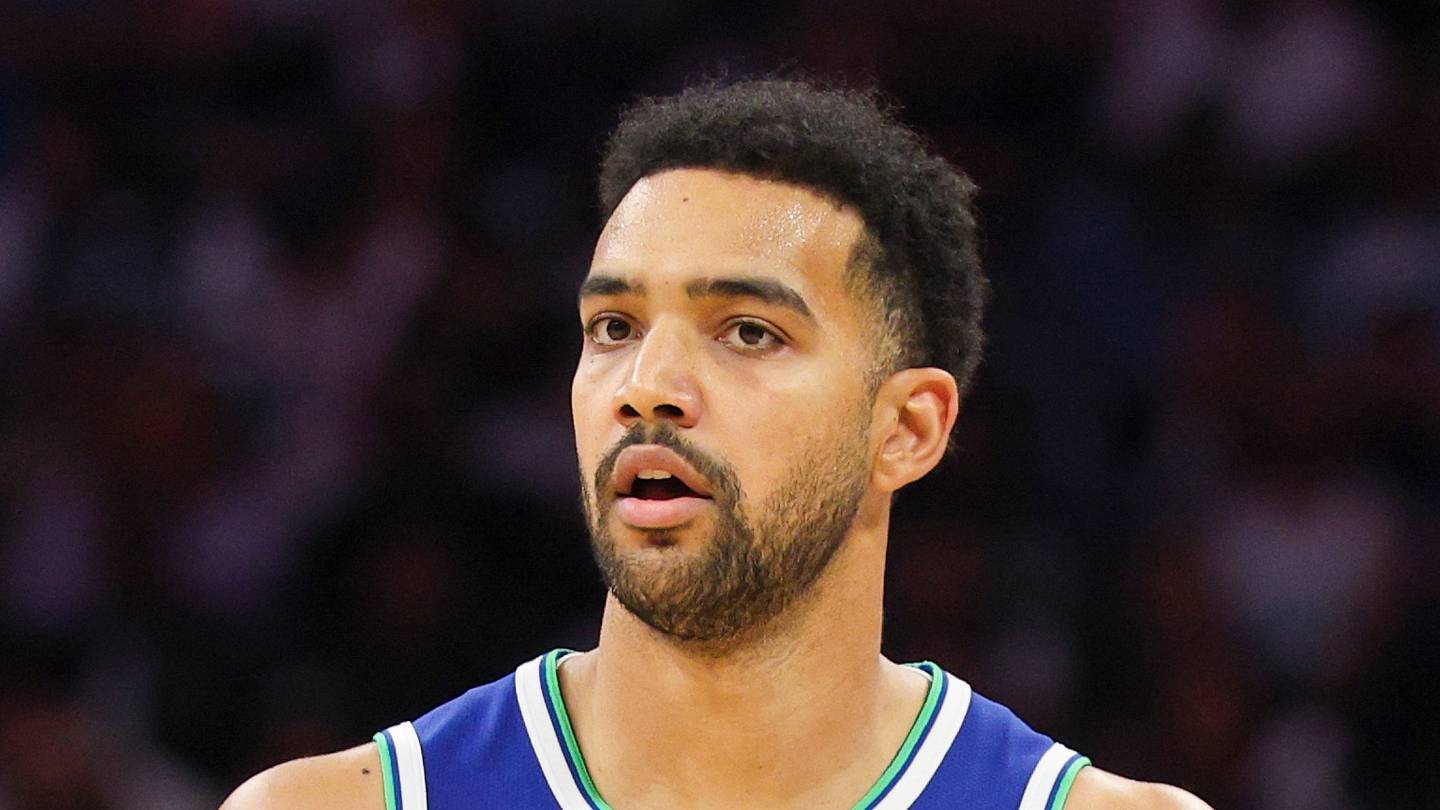
Trey Lyles took five threes in Orlando on Friday. As of Sunday, October 25, that is the part of his bench role I want Chris Finch to preserve. Give him an open perimeter catch and I want a shot, rather than a pause that lets the defense reset.
Lyles should keep a place in Minnesota’s frontcourt rotation by shooting willingly and finishing defensive possessions with rebounds. His nine points in the 115-93 win were useful. The way he distributed his attempts offers a better blueprint than asking him to reach a particular scoring total.
Five attempts are the encouraging part
According to Basketball Reference’s October 23 box score, Lyles made two of five threes and three of six shots overall in 16 minutes, 32 seconds. Five of his six field-goal attempts came from outside the arc. That is the shot mix I would encourage when he plays beside a center.
An open three from the second big can make a straightforward possession work. The ball handler drives, the defense helps and the pass finds Lyles outside. I want him prepared to finish that sequence. Passing up a clean look makes the next player solve a defense that has had time to recover.
Finch should build on that willingness while keeping the quality of the opportunities high. Getting Lyles a clean catch should be the aim when the defense commits extra attention to the ball.
That means there should be a distinction between permission and obligation. A defender closing hard creates a reason to move the ball or attack the closeout. A defender standing well away creates a reason to shoot. Lyles doesn’t need a quota that encourages a contested attempt at the end of an otherwise good possession.
Judge his decisions by whether he takes the first good opening the offense produces. A miss on the right read should earn him another chance to make the same read.
His Sacramento numbers set a sensible expectation
Lyles’ Basketball Reference career page lists three-point percentages of 36.3 in 2022-23, 38.4 in 2023-24 and 34.0 in 2024-25, all with Sacramento. In that last season, he averaged 3.4 three-point attempts in 19.6 minutes.
Those seasons give Minnesota a reason to keep offering him perimeter opportunities. They also give us a reason to resist declaring him a shooting solution after two makes in Orlando. The difference between the best and worst percentage in that stretch is meaningful to a defense deciding how aggressively to help off him.
The Wolves should accept that uncertainty. A bench forward can help an offense without being its most accurate shooter. The important question is whether the defense has to account for his next catch. Taking the available shot gives Lyles a chance to impose that cost; repeatedly turning it down makes the opponent’s choice easier.
The scoring expectations should stay modest. I don’t want possessions designed to produce a Lyles isolation or an early, difficult jumper. I want possessions designed for Anthony Edwards and LaMelo Ball to end with a reasonable alternative when the defense takes away their first choice.
That is a narrower assignment, and it suits what Minnesota should ask from this spot in the Wolves’ frontcourt depth chart. The offense needs someone willing to use the space a possession creates.
Keep the centers’ jobs distinct
ESPN’s Orlando game data lists no three-point attempts for either Rudy Gobert or Joan Beringer. Lyles’ perimeter attempts offer a different way to use a frontcourt position. I would explore that difference before treating him as a substitute for everything a center does.
For a Lyles-and-Beringer pairing, my preferred division is simple: let Beringer screen and work toward the rim, with Lyles available outside. That arrangement gives the ball handler two destinations at different depths. It also lets the young center concentrate on an assignment that doesn’t require him to become a perimeter threat.
The pairing still has to defend. Spacing is a reason to try a group, not a reason to excuse it if the opponent keeps getting good shots. Finch should evaluate those minutes as a unit, including whether the guards can contain the ball and whether the bigs can finish the stop.
That builds on the question in our piece about Beringer earning the backup center minutes. Lyles should give Finch a way to complement that development. There is no need to make every useful Lyles shift an argument for reducing Beringer’s role.
The rebounds make the shooting easier to live with
Basketball Reference credits Lyles with six rebounds against Orlando, including four on defense, plus two assists and no turnovers. Those contributions matter to the job I want him doing. The Wolves need a forward who remains useful through possessions when the shot never comes to him.
His Sacramento history offers a reasonable benchmark here, too: Basketball Reference lists 4.6 rebounds per game in 2024-25. I would rather see that kind of steady support than judge his next appearance entirely by whether two more threes fall.
On a cold shooting night, he can still help by securing the ball and making a quick pass. On a hot one, the same habits keep the offense from becoming a series of attempts to feed him. Both versions should fit around Minnesota’s primary creators.
Edwards went 5-for-23 and Ball 4-for-13 in Orlando, per ESPN. Minnesota will need nights when the supporting players keep the offense functional through misses from its stars. Lyles doesn’t have to rescue those possessions with ambitious individual scoring. Taking the open shot, keeping the ball moving and collecting the rebound are enough to give his minutes a purpose.
The next time a defense leaves Lyles alone outside, I want him ready to fire.