
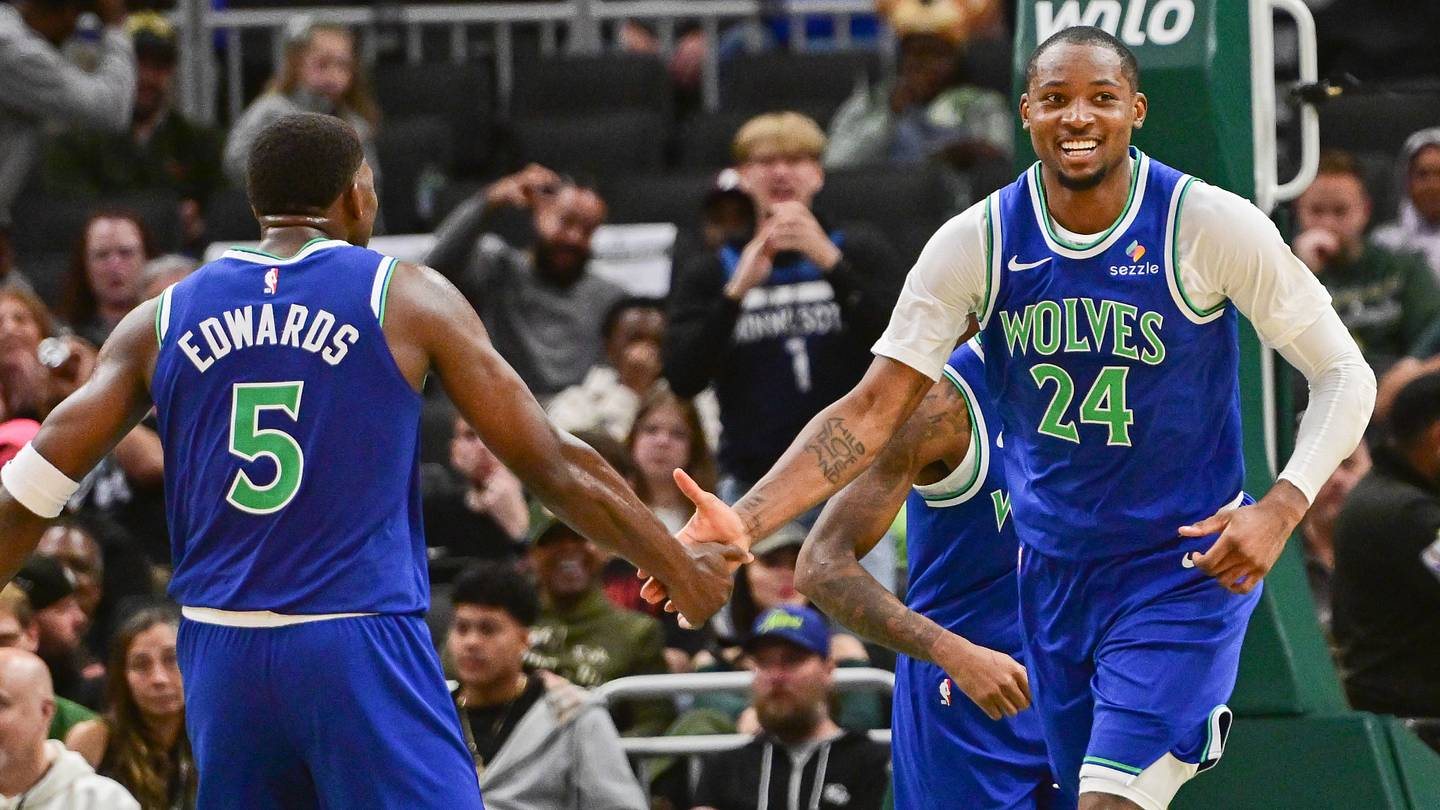
Jonathan Kuminga took 10 shots in the Timberwolves’ 131-106 win at Miami on Wednesday, October 21. He also finished with four steals, three assists and one turnover, according to ESPN’s game feed. That is the version of his job I want Minnesota to encourage: make a difference without needing the offense to stop for him.
I would resist turning a good debut into a request for more touches. Kuminga can earn a large role by defending, making the next pass and taking the openings that Anthony Edwards and LaMelo Ball create. The opener offered a useful starting point for that plan, even with a rebounding line that needs to improve.
Ten shots left room for a useful offensive night
The ESPN box score credits Kuminga with 12 points on 5-of-10 shooting, including 2-of-4 from three. Edwards took 29 field-goal attempts and Ball took 17. Kuminga found a productive scoring night alongside them without matching either player’s volume.
That arrangement makes sense to me. I want Edwards deciding how to attack a defense and Ball helping get the offense organized. Kuminga’s first responsibility should be giving them a useful destination for the ball. Be available when a defender helps, move when a passing lane opens and make a quick decision after the catch.
Finch should use the next games to establish which actions keep producing good attempts when the opponent is better prepared. Start with a screen for a ball-handler, then let Kuminga roll into space or pass when help arrives. I would give him that clear sequence before asking him to create from a standstill.
Our earlier argument for starting Kuminga because of the Wolves’ size needs dealt with who belongs on the floor. This is about what he should do once he’s there. A starting spot should come with clear work, and I would put screening, cutting and quick passes ahead of creating a separate isolation diet.
The three assists matter alongside the scoring
Kuminga recorded three assists and one turnover, per ESPN. That is a modest total, but it belongs in the discussion of his offensive fit. A player can help the ball reach a better scoring option without needing to be the primary creator.
I would build some of his possessions around that distinction. When he catches with an advantage, attack it. When the defense closes the route to the basket, move the ball early enough that the next player still has something to use. Holding it until the defense resets would defeat the purpose of putting another passer next to Ball.
The most appealing outcome is an offense in which Kuminga’s involvement makes the stars’ work easier. He should have permission to finish a possession, but he should also feel free to improve it with a pass. Three assists and one turnover are a good first entry for that job. I would judge the next games on how quickly he recognizes the open teammate.
That also gives Finch something to coach when the jumper misses. Passing and movement should remain part of Kuminga’s night regardless of whether his first outside shot goes in.
Four steals should raise the defensive expectation
ESPN lists four steals and one block for Kuminga in the opener. I care more about that activity than whether he becomes a bigger scorer in the next game.
Four steals every night would be an unreasonable target. What I want is a defensive assignment that keeps him involved: contest his own matchup, help without abandoning a shooter and recover when the ball changes sides. A steal is valuable, but chasing one at the expense of the possession would be a poor way to reproduce Wednesday’s total.
His next challenge is to keep contributing when an opponent protects the ball and there are fewer chances for a clean recovery. Staying attached to a shooter through a whole possession can be valuable work even when somebody else ends up with the defensive statistic.
That is where I think this role can become substantial. Minnesota can ask Kuminga to carry difficult defensive work while leaving most of the offensive creation elsewhere. The full Wolves roster and depth chart puts those responsibilities in context. There should be room for a forward whose contribution changes from possession to possession without requiring a play call each time.
One rebound is the part I wouldn’t accept
Kuminga had one rebound, and ESPN identifies it as an offensive board. He had no defensive rebounds. Rudy Gobert finished with 15 total rebounds, Edwards had 10 and Jaden McDaniels had eight, according to the same box score.
A comfortable team win should not let that disappear. I want Kuminga helping finish defensive possessions, especially if Minnesota is going to ask him to defend actively away from the basket. Coming up with a steal ends one possession. Securing the ball after a teammate forces a miss is another way to do the same essential work.
I would give him a simple priority after a shot: find a body, then pursue the ball. The expectation should be participation in the rebound, even on possessions where Gobert collects it. A raw total won’t capture every useful box-out, but no defensive rebounds is still a reason to look closely at that part of his game.
There is an offensive demand to retain, too. Kuminga took no free throws in Miami, per ESPN. Our earlier piece on his need to generate trips to the line still applies. Playing within the offense should include attacking an open lane, not just accepting outside shots.
Finch should make the job clear before the scoring expectations grow: defend, move the ball, attack the available space and help finish possessions on the glass. Kuminga can be central to what the Wolves do without becoming central to every play they run.