
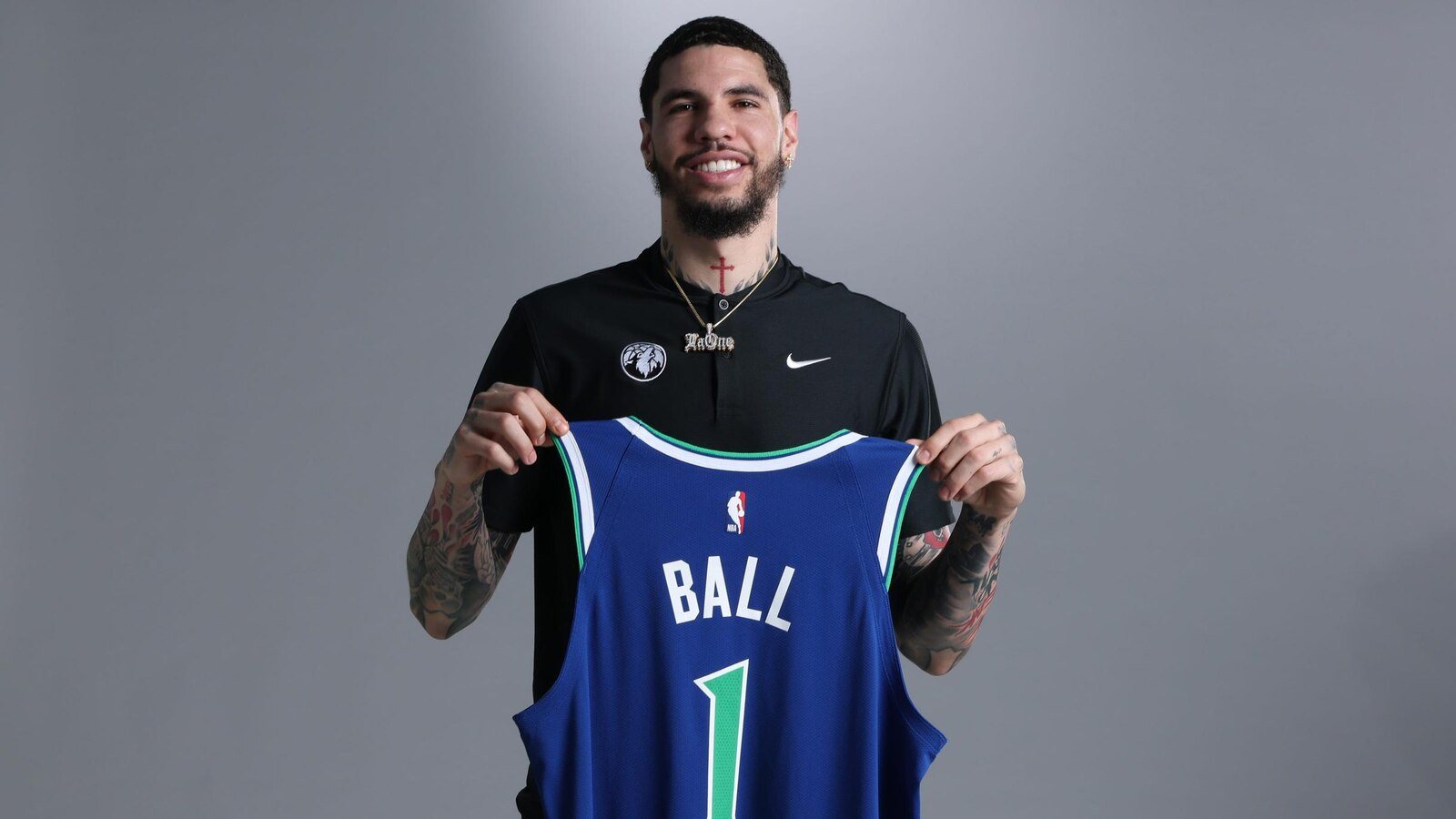
LaMelo Ball’s stats deserve attention. So does the amount of time he needed to produce them. As of Tuesday, October 20, the number I want Chris Finch thinking about is 28: Ball’s minutes per game last season in Charlotte, according to Basketball Reference.
I’d give him more in Minnesota. My starting target would be around 32 minutes a night, with room to adjust as the season develops. Ball’s production makes a strong case for a bigger role, with each increase judged by how he handles the added time.
Read the LaMelo Ball stats in the right column
Jace Frederick’s October 19 Pioneer Press column put Ball’s per-36 production into the conversation about his standing among the league’s best players. I care more about what that rate means for the Wolves’ substitution pattern than where it puts him on a preseason list.
Here are the two versions of his Charlotte season, from Basketball Reference’s per-game and per-36 tables:
| 2025-26 Charlotte production | Per game | Per 36 minutes |
|---|---|---|
| Points | 20.1 | 25.8 |
| Assists | 7.1 | 9.2 |
| Rebounds | 4.8 | 6.2 |
The second column describes what he actually averaged each appearance. The third puts the production on a common minutes scale. It helps compare players with different workloads, but it doesn’t tell Finch what Ball will deliver if he leaves him in longer.
Those extra possessions have to happen against a defense that keeps adjusting. They also have to fit alongside Anthony Edwards. I want Ball organizing good shots when he is on the floor, whether the box score ends with a larger scoring average or a smaller one.
That’s why I’d start with a minutes target. Minnesota should find out how much of that productive Charlotte role Ball can sustain alongside his new teammates before deciding what his full workload ought to be.
More games mattered as much as the scoring rate
Basketball Reference lists 72 games for Ball in 2025-26. In the three preceding seasons, he played 36, 22 and 47. That makes last season an encouraging change in availability, whatever anyone thinks of the highlights.
It also makes me reluctant to treat the lower minutes average as a problem that needs an aggressive fix. The season with 72 appearances came at 28.0 minutes a game. The previous season’s 47 appearances came at 32.0. Those numbers don’t establish that shorter shifts caused better availability, and I wouldn’t build a medical argument out of them.
They do establish the workload Minnesota is starting from. A move from 28 to my proposed 32 is already four extra minutes each game. Asking for 36 would mean adding eight. I’d rather Finch learn what the first increase looks like before committing to the second.
There should be nights when the matchup and the game justify more. There should also be room to keep the shifts shorter when Ball isn’t helping. A useful target gives the coach a starting point without turning every substitution into a referendum on whether he trusts his point guard.
Spend the extra minutes with Edwards
I’ve already argued for playing Edwards and Ball together. A gradual increase in Ball’s time would give Finch more chances to develop that pairing without requiring him to stretch every shift.
My preference would be to add shared minutes first. Let Ball bring the ball into a possession with Edwards available to attack the next opening. Let Edwards initiate while Ball stays involved as a receiving and passing option. The purpose of the added time should be building a partnership.
The rest of the Wolves’ roster and depth chart matters to that choice. Every extra guard minute changes who sits, who handles the ball and which combinations get practice under game pressure. Finch should be able to explain what he wants from those combinations beyond having his biggest names on the floor.
For me, the test is whether the offense can get into its next action when the first opening disappears. If Ball’s additional shifts help Minnesota do that, the increase is earning its place. If the ball simply stays in his hands longer, a bigger minutes total hasn’t solved much.
Don’t turn an assist rate into an assist quota
Ball’s passing offers a reason to want more of him, particularly in his partnership with Rudy Gobert. But I wouldn’t judge the experiment by asking him to reach the 9.2 assists in the per-36 column.
A pass that starts a productive possession might never become an assist. A teammate might move it again, drive into a second defender or miss the shot. I’d watch whether Ball keeps finding the useful pass after an opponent takes away the obvious one. That is a better reason to extend his stint than being one assist short of a tidy stat line.
The same applies to scoring. More time with Edwards could mean Ball has fewer reasons to shoot on a given possession. I’d welcome that if the result is a better attempt for the team. Minnesota doesn’t need to recreate every part of his Charlotte box score to benefit from his talent.
Start around 32, watch how the shared shifts work, and let Ball earn the next increase through the quality of the offense. His per-36 numbers make me want to see more. Let the shared shifts set the substitution clock.