
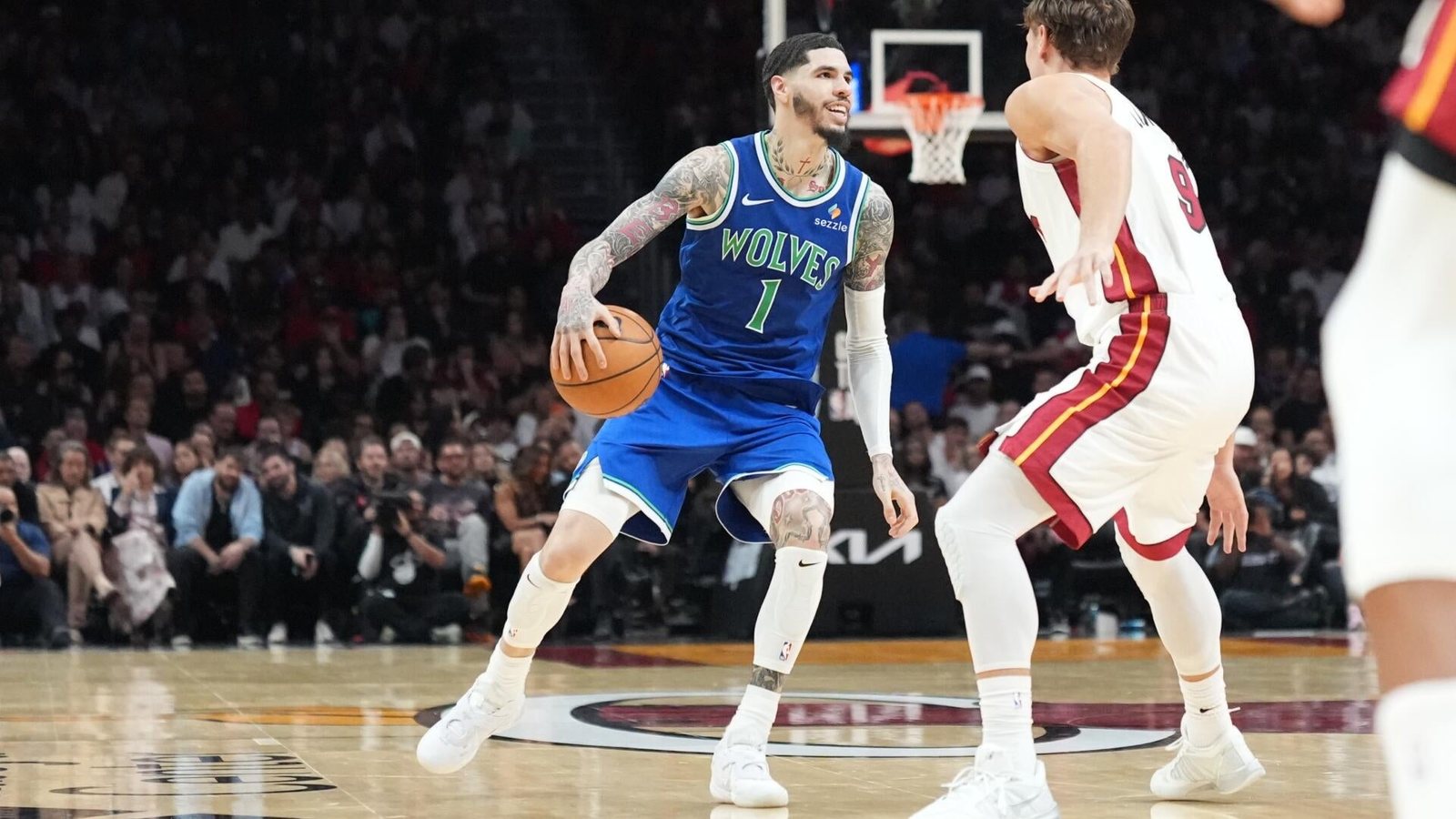
LaMelo Ball traveled on the stepback that became a talking point from his Timberwolves debut. The NBA Referees account explained the missed call Thursday: he took four steps after gathering the ball when he was allowed two. Minnesota can accept that without putting its new point guard on a shorter leash.
After Thursday’s explanation, I want Chris Finch to treat this as a footwork correction. Ball should keep looking for his own shot. The Wolves need him to recognize when his dribble has ended and get into a legal shooting motion, rather than depend on a whistle staying quiet.
Why the LaMelo Ball travel was illegal
The NBA’s traveling rule allows a player gathering while dribbling two steps to stop, pass or shoot. The first step is a floor contact after the gather. You cannot decide whether the move is legal simply by counting every stride from the last bounce.
The gather itself is defined in Rule 4. It can happen when a dribbler puts both hands on the ball, lets it rest under control, or puts a hand underneath and pauses it. Gaining enough control to hold, pass or shoot also qualifies. Getting a second hand onto the ball is not the only way to end a dribble.
For this specific play, the referees’ account placed Ball’s gather with his right foot already down. Its explanation allowed a left-right sequence afterward. Ball instead took four steps after the gather, according to the account’s October 22 post. That is the basis for calling this a travel, rather than an argument about whether a stepback looks strange.
I would keep the coaching conversation just as specific. Find the point where Ball controls the ball, then work on the steps that follow. Telling him to stop being creative would be a much broader response than this possession warrants. He needs a move he can repeat legally when a defender takes away his first opening.
The official explanation also saves Wolves fans from defending the indefensible. A made basket can be an enjoyable highlight and still come from an illegal move. I want that call made correctly when Minnesota benefits from it, too.
His debut gave Finch a reason to preserve the freedom
Per ESPN’s game data, Ball finished Wednesday’s 131-106 win at Miami with 21 points and six assists. He shot 7-for-17 overall and 5-for-13 from three.
I like that Ball was willing to shoot that often alongside Anthony Edwards. If the expectation is that he only organizes possessions and waits for Edwards to finish them, Minnesota would be choosing a narrower version of the partnership. I want both guards ready to attack an opening without checking whose turn it is.
That is why the case for playing Edwards and Ball together survives an ugly individual possession. Edwards should be a passing target when the space for Ball’s own shot disappears. Giving up the ball in that situation can still leave Minnesota with a shot it wants.
My preferred correction would include that decision. If Ball cannot reach his shooting spot within the legal steps available, move the ball and get involved again. A pass should remain an acceptable end to the action. There is no need to salvage every attempt at separation with another retreat.
With the rest of the Wolves’ roster and depth chart in mind, I would build a passing option into the drill as well. Give Ball a teammate cutting toward the basket or waiting on the perimeter. The decision should include more than finding room for his own jumper.
A missed whistle makes the turnover line incomplete
ESPN recorded one turnover for Ball and 14 for Minnesota. The travel went uncalled, so the official turnover total cannot tell us whether his footwork was clean on that possession. This is exactly the kind of play I would include in a film review even though it never entered that column.
In practice, I would ask Ball to start with a defender crowding the shot he wants. Make him choose between releasing on time and passing out. Then let him try again. I would rather see him rehearse that choice than run through the same move against empty space and call the problem solved.
For the next stretch of games, I would judge Ball on whether he has an answer when his first move fails. Can he stop legally? Can he find a teammate before the possession gets stuck? Can he give the ball up and make himself useful again? Those are better demands than asking him to erase the risk from every possession.
Minnesota made 21 of 50 threes Wednesday, per ESPN. Our analysis of Edwards’ 45-point opener argued for keeping confidence in the perimeter offense when shots miss. I would apply the same patience to Ball, with a firm requirement that his attempts begin legally.
A missed jumper is a result the Wolves have to live with. Extra steps after the gather are something they should work to remove. Ball’s next stepback should make the defender worry about the shot and leave the referee with nothing to explain.