
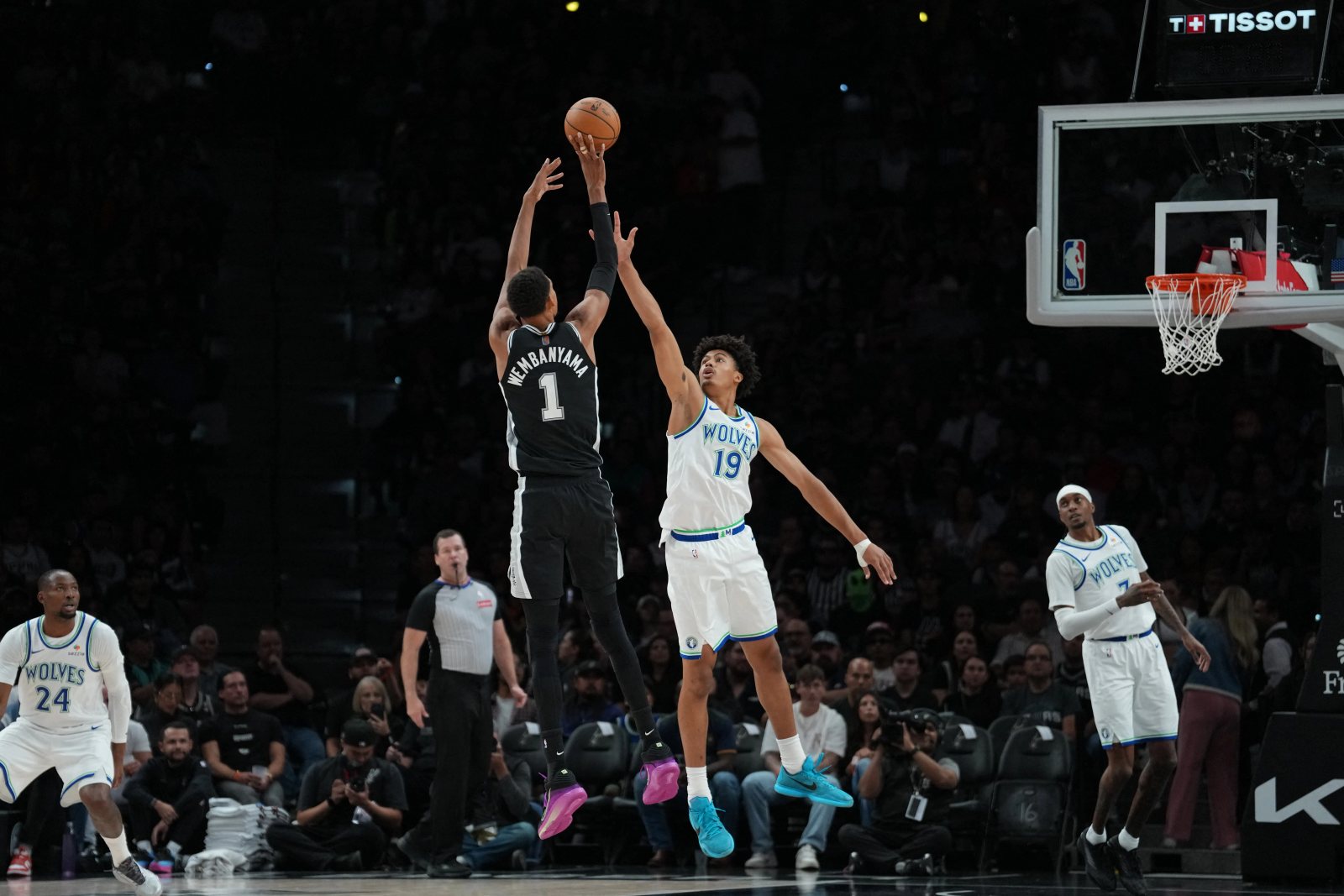
Joan Beringer’s most encouraging stretch against the Spurs came after his night could have fallen apart. Basketball Reference credits him with four fouls in the third quarter of Minnesota’s 121-111 loss on Saturday, October 31. Then he played every second of the fourth.
I want Chris Finch to keep giving Beringer that chance. A young center has to learn how to defend with fouls already on the board, and Saturday gave Minnesota a reason to let that education continue in meaningful minutes. The final quarter deserves a place in the conversation about his start, even with an ugly team result.
The fourth quarter changed the foul story
The Basketball Reference quarter splits make Beringer’s night more interesting than his final five-foul total. He committed no fouls in 15:51 before halftime. All four of his third-quarter fouls arrived within his 6:37 of playing time in that period. He followed that with one foul in 12 fourth-quarter minutes.
That sequence matters to how I would coach his next appearance. A four-foul quarter is a problem worth stopping practice to address. It also shouldn’t become the only thing Finch remembers when deciding whether Beringer can handle the end of a close game.
Beringer finished the fourth with four points, two offensive rebounds, an assist and a steal, per Basketball Reference. He had no turnovers in the period. Those are useful contributions from a player whose evening had just become much harder to manage.
Our earlier case for Beringer as the backup center centered on avoiding fouls. Saturday raises a different coaching question: once the trouble arrives, how much room should he get to recover? I would give him another stint whenever the matchup allows it, rather than make his next mistake an automatic end to his night.
Finch gave him a real closing assignment
This was substantial responsibility. Minnesota trailed 93-88 entering the fourth, according to Basketball Reference’s line score. Beringer stayed on the floor for the whole period while Trey Lyles played 47 seconds, per its quarter table.
Minnesota lost the quarter 28-23. Finch was willing to keep Beringer involved with the outcome unsettled, and Beringer completed the assignment without fouling out.
That is the part I would preserve. Learning to play with four fouls requires actual possessions with four fouls. A player has to decide when to challenge, when to stay down and when to rely on a teammate. I want Finch teaching those decisions while Beringer can still act on them in the same game.
There will be nights when the matchup or a repeated mistake calls for a change. My preference is to make that decision about the possession in front of him. A foul count should inform the choice without making it for the coach.
Keep the offensive job manageable
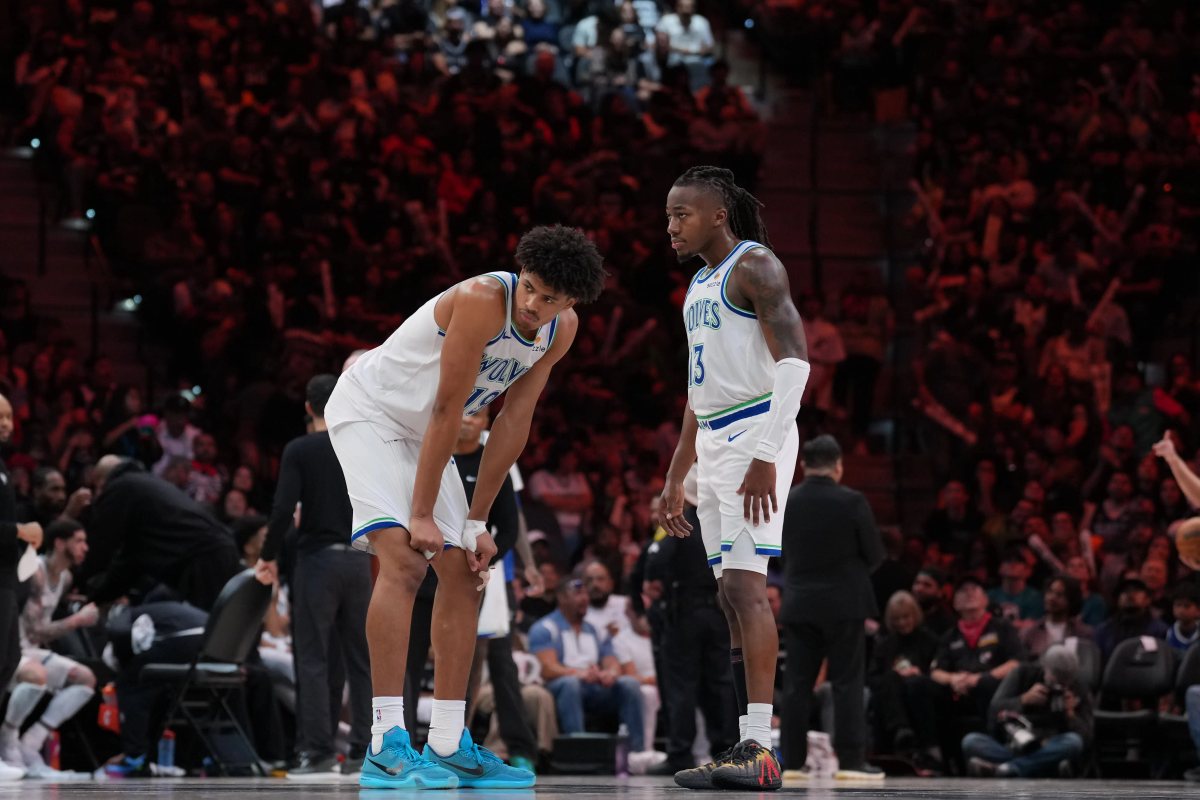
Beringer scored 12 points on 4-for-8 shooting and made four of five free throws, according to Basketball Reference. He also had two assists and no turnovers across his full 34:28. That kind of restraint should define his offensive assignment.
My preferred instructions are straightforward: screen, move toward the rim, finish the available chance and pass when the defense closes it. The Wolves don’t need to answer a difficult defensive quarter by asking him to create offense on his own at the other end.
The zero in the turnover column earns credit. For the next game, I would keep asking for quick choices with the ball and let the guards carry the harder creation work. His touches should help a possession continue rather than ask him to rescue it.
The Wolves’ roster and depth chart puts the bigger rotation discussion in context. ESPN’s AP recap says Rudy Gobert missed Saturday with back spasms and Anthony Edwards was absent following knee surgery. Those absences explain why I would value a manageable assignment for Beringer so highly. Finch already had major pieces missing; there is little benefit in making the replacement center’s job more complicated.
Trust still comes with a defensive demand
There is an obvious limit to the encouragement. Beringer had one defensive rebound in the full game, and Victor Wembanyama scored 43 points, per Basketball Reference. Staying on the floor is only useful if Minnesota can defend well enough around him.
The defensive rebounding problem against San Antonio deserves its own correction. I would make Beringer’s recovery after a contest part of his next practice assignment. Finish the challenge, locate a body and help secure the ball. Playing through foul trouble cannot mean withdrawing from the rest of the defensive possession.
I also wouldn’t assign all of Wembanyama’s points to Beringer from a box score. The team result tells Finch there is work to do; it doesn’t identify responsibility for every basket. The coaching response should be specific enough that Beringer knows which decision to change on his next trip down the floor.
Saturday supplied a useful starting point for that conversation. Beringer had a terrible quarter for fouls, came back and stayed involved through the finish. When the next difficult stretch arrives, I want Finch to give him a route back into the game again.