
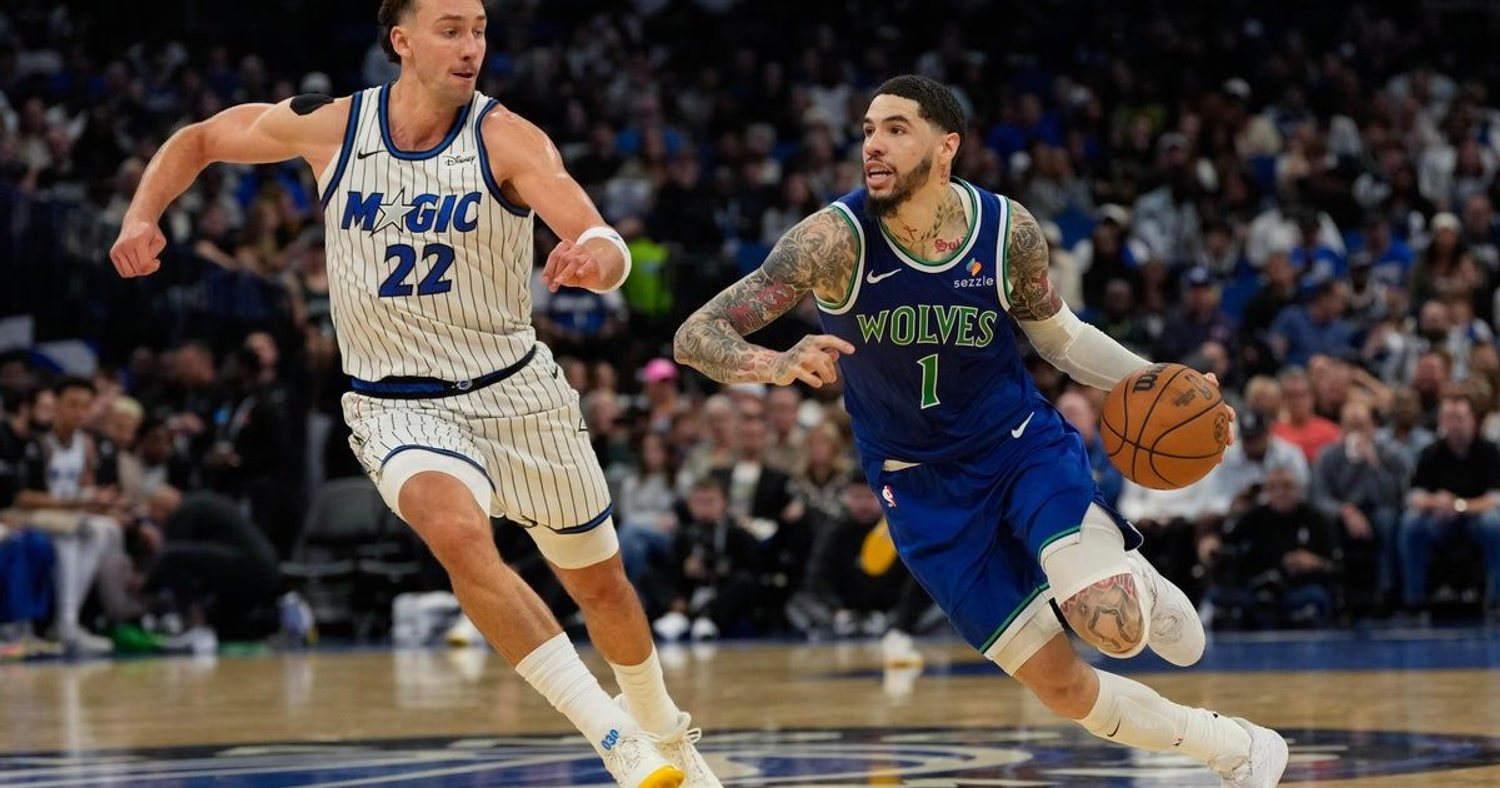
Anthony Edwards shot 5-for-23 on Friday night, and the Timberwolves still beat Orlando 115-93. That is the kind of win I want Minnesota to learn from. A team with Edwards should be able to survive his misses without spending the whole night waiting for him to rescue it.
The reason to feel good on Saturday morning is the shared work on the glass. According to Basketball Reference, Minnesota collected 22 offensive rebounds and won the overall rebounding count 61-43. I want Chris Finch to make that involvement a requirement for the rotation. Edwards’ scoring should give the Wolves a higher ceiling, while the players around him build a way to win when his jumper fails.
The Wolves bought themselves more attempts
The Basketball Reference box score puts Minnesota at 42-for-98 from the field and Orlando at 37-for-84. The Magic actually finished with the better field-goal percentage, 44.0% to 42.9%. Minnesota had 14 more attempts to work with.
Rebounding deserves a large share of the credit for that gap. Orlando had eight offensive boards against Minnesota’s 22. Recovering a miss lets an offense keep working after its first attempt has failed. On a night with so many Edwards misses, those recoveries were especially valuable.
That does not mean every extra attempt came from a rebound, or that every rebound became a basket. It means Minnesota kept giving itself chances. I would rather see the Wolves generate those chances than need an efficient scoring line from Edwards just to stay competitive.
There is a useful way to judge the work beyond the raw total. Divide Minnesota’s 22 offensive rebounds by those 22 plus Orlando’s 35 defensive rebounds, using Basketball Reference’s figures. The result is 38.6% of the rebounds credited to players at Minnesota’s offensive end. That is a substantial share of the available recoveries, even allowing for a game with plenty of misses.
Joan Beringer gave the second unit a purpose
Basketball Reference credits Joan Beringer with seven offensive rebounds and nine total in 14:42. Rudy Gobert had three offensive boards and nine total. The backup center recovered more misses at the attacking end than the starter, despite playing fewer minutes.
I like that as a definition of Beringer’s job. He does not need an offense built around his touches to give the second unit something valuable. Pursue the ball, give teammates another possession and finish the opportunities that reach him. Against Orlando, he also scored nine points on 4-for-8 shooting, per Basketball Reference.
The temptation after a productive reserve appearance is to jump straight to a demand for more minutes. I would start by asking for the same work in the minutes he gets. Beringer’s rebounding gives Finch a reason to trust the center rotation without needing to duplicate Gobert’s entire game.
There was help beyond the centers. McDaniels and Ball each had three offensive rebounds, Kuminga and Trey Lyles had two apiece, and Edwards and Bones Hyland each had one, according to Basketball Reference. Gobert and Beringer combined for 10; everyone else supplied 12. This was a team assignment carried out across positions.
That extends the argument for giving Ayo Dosunmu permission to pursue offensive rebounds. Dosunmu had no offensive boards in Orlando, per Basketball Reference, but Minnesota still found contributions elsewhere. The habit should belong to the rotation rather than depend on the same guard producing the same number every game. The full Timberwolves roster and depth chart shows the players Finch has available to share that responsibility.
Edwards did not need a replacement star
Edwards and Jaden McDaniels shared the team scoring lead with 15 points each. Gobert and Dosunmu scored 14 apiece, Terrence Shannon Jr. had 13, Ball had 12 and Kuminga had 11, per Basketball Reference. Seven players reached double figures without anybody scoring more than 15.
That is the most encouraging scoring detail for me. Nobody had to produce an Edwards-sized night to cover for Edwards. Minnesota spread the finishing around and won by 22.
Ball also had a difficult shooting game, going 4-for-13 overall and 2-for-8 from three, according to Basketball Reference. Together, the starting guards made nine of 36 field-goal attempts. The win therefore offers something more useful than a simple story about one star carrying the other.
The rest of the Wolves still had to make shots. Shannon went 4-for-6, Gobert 6-for-8 and Dosunmu 6-for-11, per Basketball Reference. Extra possessions need somebody to finish them. Those teammates supplied enough scoring to keep the starting guards’ misses from defining the result.
Keep the shooting freedom and demand the recovery work
Orlando helped. The Magic made eight of 39 threes, while Minnesota made 14 of 37, according to Basketball Reference. That six-make difference supplied an 18-point edge from outside. I would not expect every opponent to shoot that poorly.
Minnesota also left points at the line, making 17 of 30 free throws, per Basketball Reference. A narrower game would make those misses more painful. Winning comfortably should leave room to demand better there.
Still, the Wolves had control before the closing minutes. ESPN’s game feed shows a 29-15 third quarter that took Minnesota’s lead to 86-60. They were building separation while Edwards was having a poor shooting night, rather than surviving until one late burst saved them.
I still want the willingness to shoot that we argued for after Edwards’ 45-point opener in Miami. Friday adds a demand for everyone around those attempts. When Edwards misses, the next Wolves action should be a pursuit of the ball, a retreat to protect the basket or a move to receive the next pass. Keep working while the shot is cold. That is how Minnesota gives its best scorer room to have a bad night.