
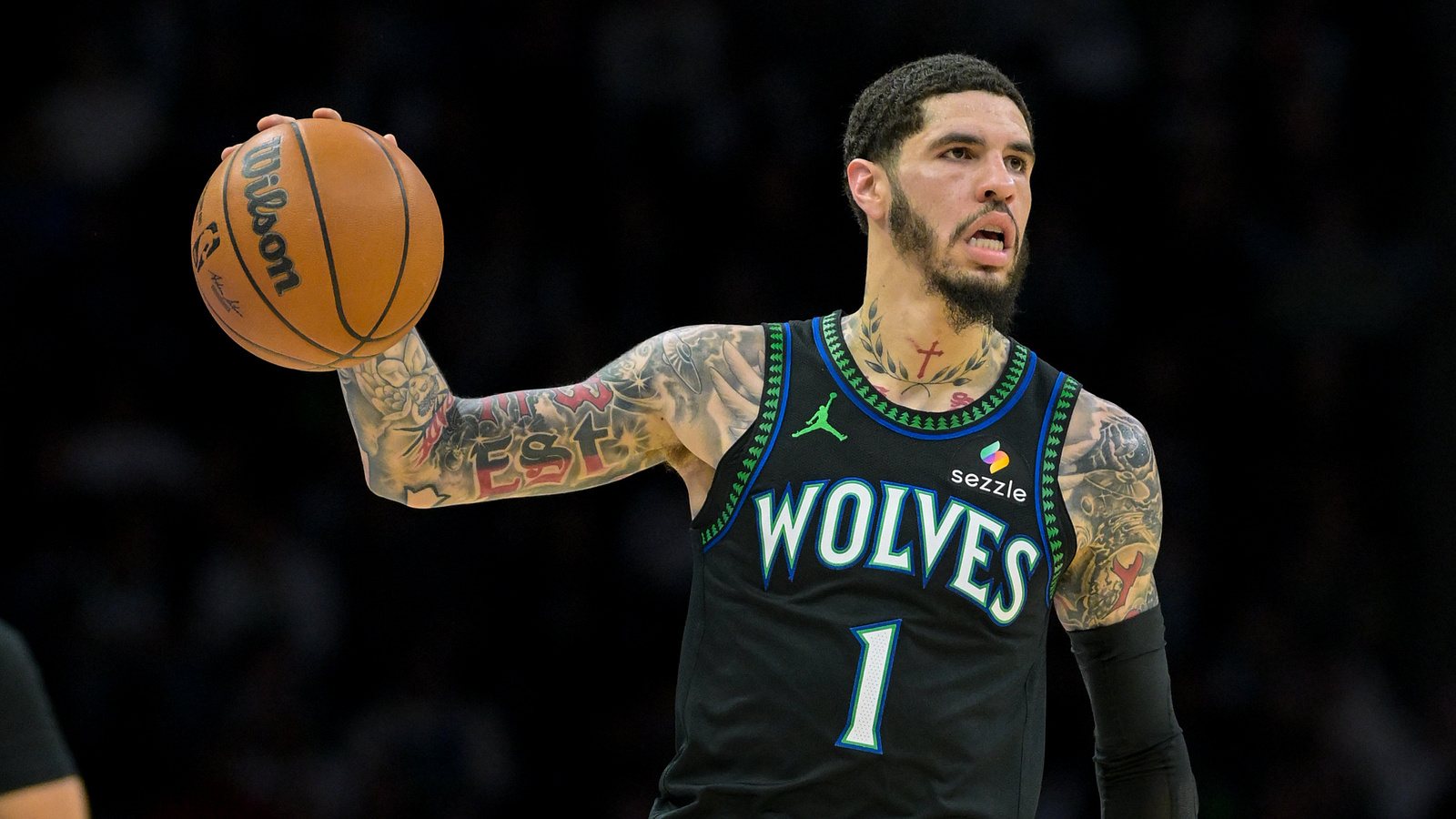
LaMelo Ball has never had a defensive season like this one. Through 12 games with Minnesota, his steal rate, defensive box plus/minus and individual defensive rating are all career bests on Basketball Reference, and the Wolves allow 101.0 points per 100 possessions when he plays. David Suggs of The Sporting News wrote on Monday that Ball is finally playing defense.
My take: the praise is earned, but the on/off number gets too much of the credit. The 10.7-point on/off gap is one he shares with Rudy Gobert and Jaden McDaniels. What belongs to Ball is the steals. He’s taking the ball away at the highest rate of his career, and that’s the part I’d bet on when Anthony Edwards comes back.
The career column
Here’s Ball this season next to his Charlotte years, per his Basketball Reference page:
| Defensive stat | 2026-27 (MIN) | Best season before | Career |
|---|---|---|---|
| Steal percentage | 3.0% | 2.8% (2023-24) | 2.2% |
| Defensive box plus/minus | +1.4 | +0.7 (2020-21) | -0.1 |
| Defensive rating | 105 | 110 (2020-21) | 114 |
| Steals per game | 1.8 | 1.8 (2023-24) | 1.4 |
His defensive box plus/minus was negative in four of his six Charlotte seasons. It’s +1.4 now. His individual defensive rating is nine points better than his career mark.
Box plus/minus and individual defensive rating are both estimates built from box-score stats and team defense. Ball’s 105 sits right next to Minnesota’s team mark of 104.8, so part of that nine-point gain came with the move to the league’s best defense. The steal rate is the line that’s his alone. He has one block in 12 games and the lowest defensive rebound rate of his career, so the steals are the part of his box score doing the work.
He has 21 steals in 331 minutes, per his game log, and at least one in 11 of 12 games. The only blank was November 6 in New Orleans. He had 14 of those steals in the eight games since Edwards went out, the same 1.75 a game as in the four games before.
The on/off number is shared
Here’s the split behind the praise, from Ball’s on-off page:
| Wolves defense | Ball on (331 min) | Ball off (251 min) |
|---|---|---|
| Opponent points per 100 possessions | 101.0 | 111.7 |
| Opponent effective FG% | 47.6% | 51.4% |
| Opponent turnover rate | 18.4% | 14.0% |
| Wolves defensive rebound rate | 75.8% | 71.4% |
Now check Gobert and McDaniels. Opponents score 99.4 per 100 with Rudy Gobert on the floor and 113.1 with him off, per Gobert’s on-off page. They score 102.5 with Jaden McDaniels on and 112.1 with him off, per McDaniels’ page. The turnover rate with Gobert on is 18.4%, the same as with Ball.
Those gaps can’t all belong to one player. I wrote Thursday that Gobert’s stats say he should play more minutes, and Ball’s on/off line is partly Gobert’s line wearing a different jersey. I’m not taking the 10.7 points and handing them to Ball.
The opponent shooting split is the least trustworthy part. Teams are making 47.6% (effective) with Ball on the floor and 51.4% with him off. Over 331 minutes, a few hot or cold shooting nights swing that number a long way.
Why the steals will hold up
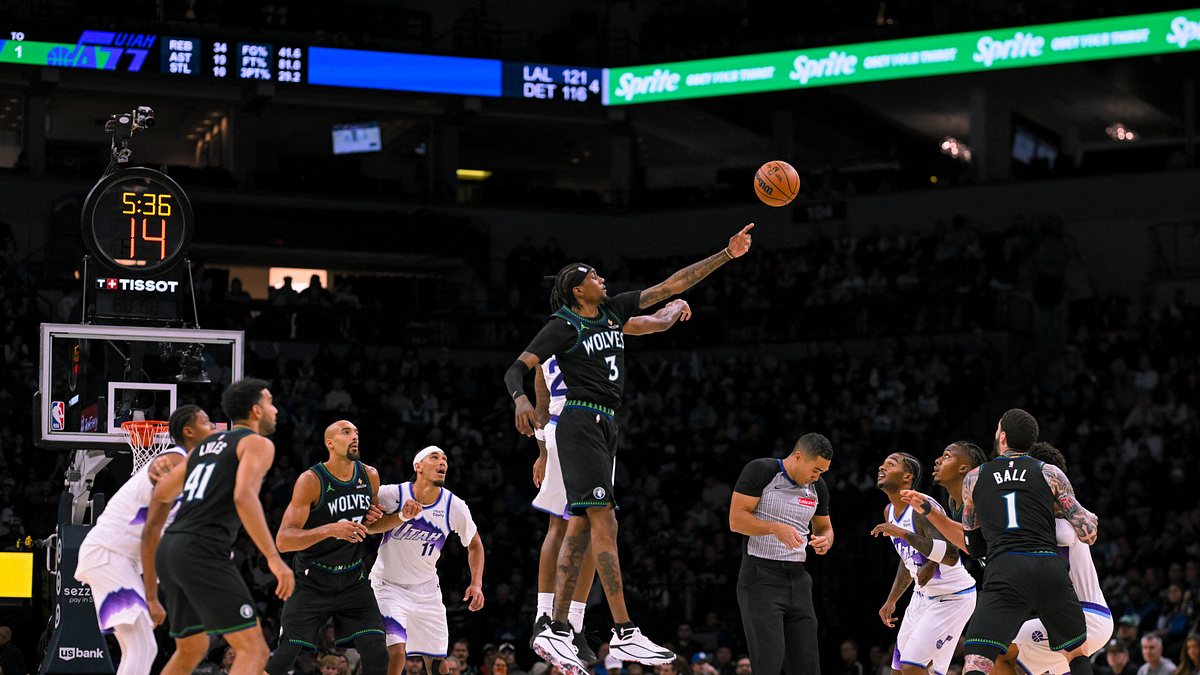
The team steal split is shared too. The Wolves’ steal rate is 10.4% with Ball on the floor and 6.4% with him off, but it’s 10.0% and 7.2% for Gobert. What I trust is Ball’s own number: a 3.0% steal rate, the best of his career, with a steal in 11 of 12 games. Those are possessions that end with Minnesota running the other way, and they don’t depend on the other team missing.
That’s also why I think this survives Edwards’ return. Edwards is out after an arthroscopic procedure on his right knee on October 29, per the injury report on the Wolves’ Basketball Reference page. Ball doesn’t need to guard the other team’s best scorer to keep doing it. McDaniels and Jonathan Kuminga can take that job, which is how I argued the Wolves should play Utah in last week’s Jazz preview, with Ball roaming a step off his man and reading passes. When Edwards is back on the wing, the Wolves add another wing defender, and Ball gets more room to gamble in the passing lanes.
Minnesota’s defense also gives him cover. The Wolves are 9-3 with the league’s best defensive rating, 104.8, and the lowest opponent effective field goal percentage, per the same page. A guard can take more chances when Gobert is behind him.
The two catches
The first is fouls. Ball is averaging 3.8 a game, the most of his career, and he had four or more in eight of his first nine games. I flagged that in October, when I wrote that his four fouls a night were a problem the blowouts hid. He’s had three, three and one in his last three games. Steals that come from reaching cost free throws. Steals that come from reading passes don’t.
The second is rebounding. Ball’s defensive rebound percentage is 9.3%, the lowest of his career by a wide margin; his previous low was 13.4%. I don’t count that against him. The Wolves rebound better with him on the floor, and Gobert (7.8 defensive rebounds a game), McDaniels (4.4) and Kuminga (4.3) are cleaning up the glass, per the team page. I made the case this week that rebounding is now part of McDaniels’ job. Ball leaking out early after a stop is a trade the Wolves should keep making.
What to watch tonight
Chicago comes to Target Center at 7 p.m. Central, per ESPN’s game page, with the Wolves on a five-game winning streak and the Bulls at 2-9. My Bulls preview has the matchup plan. For Ball, I’m watching two numbers in his box score: steals and fouls. If the steals hold at this rate while the fouls stay down, the best defense of his career is real, and it’s his.