
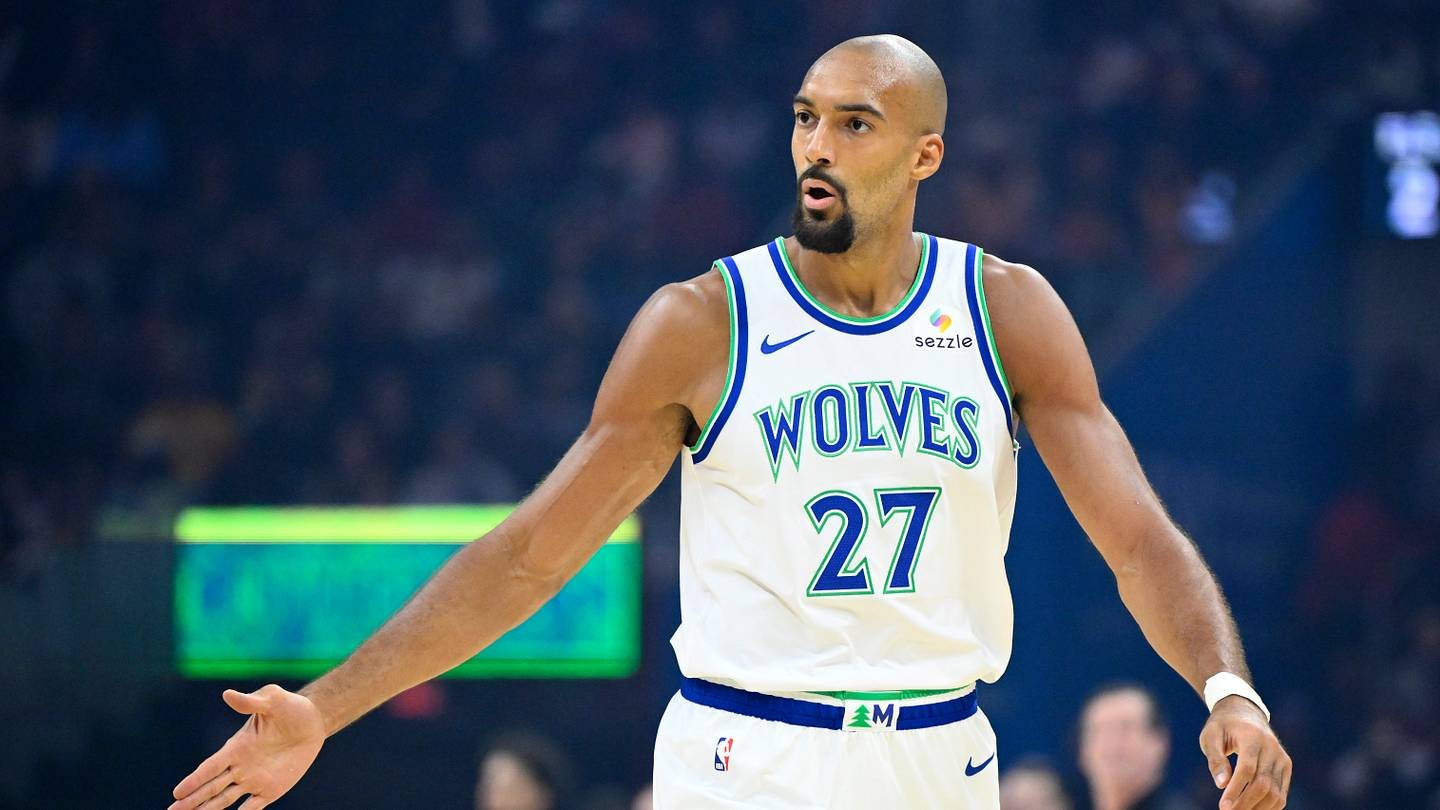
The Timberwolves are tied for the best defense in the NBA, and the reason is playing fewer minutes than he ever has in Minnesota. Rudy Gobert is averaging 29.9 minutes a game. With him on the floor, opponents score 99.8 points per 100 possessions. Without him, they score 115.8.
My take: with Anthony Edwards out, Chris Finch should push Gobert back toward 32 to 34 minutes on nights that aren’t back-to-backs, and take the time from the backup center minutes. The offense gives up a little when he plays. The defense gives up a lot when he doesn’t, and right now the defense is what’s keeping an 8-3 team at 8-3.
The split
Minnesota’s defensive rating is 106.1, tied with Detroit for the lowest in the league and ranked first on the Wolves’ Basketball Reference page. Here’s how that number breaks down with Gobert on and off the floor, per his on-off page:
| Per 100 possessions | Gobert on (298 min) | Gobert off (235 min) |
|---|---|---|
| Opponent points | 99.8 | 115.8 |
| Opponent effective FG% | 47.8% | 52.0% |
| Opponent offensive rebound rate | 22.9% | 30.6% |
| Wolves points | 115.5 | 120.2 |
| Net rating | +15.6 | +4.4 |
Put the defensive numbers in league terms. The worst offense in the NBA this season belongs to Charlotte, at 103.4 points per 100 possessions, per Basketball Reference’s league page. With Gobert on the floor, the Wolves’ opponents as a group have scored at a lower rate than that. With him off, they’ve scored at a rate that would rank behind 20 of the other 29 teams’ defenses.
The rebounding line is the one I keep coming back to. Opponents grab 30.6% of their misses when Gobert sits and 22.9% when he plays. Gobert is pulling 12.1 rebounds a game, and the Wolves give up far fewer extra chances when he’s out there.
There’s a simpler way to see it in his game log. The Wolves are +122 for the season, per their results. Gobert is +96 in the minutes he’s played. That leaves +26 for the minutes he sat.
The San Antonio game
The off-court numbers include all of the October 31 loss in San Antonio, which Gobert missed with back spasms, per the AP recap on ESPN. Victor Wembanyama scored 43 that night, and the Spurs won 121-111. That game drags down the without-Gobert defense, and some of the 16-point gap is that one night.
I don’t think it explains the gap, though, and that game makes my point anyway. Beringer started at center and played 34 minutes, per the box score, and the Wolves had no answer for a great big. After that loss I argued that Joan Beringer’s Spurs start should earn him late-game trust, and I still think he will be a real backup. But Beringer is 20, and the Wolves are 9.5 points per 100 possessions worse with him on the floor than off it this season, per Basketball Reference. Their net rating in his minutes is +4.3, against +15.6 in Gobert’s.
Why his minutes are down
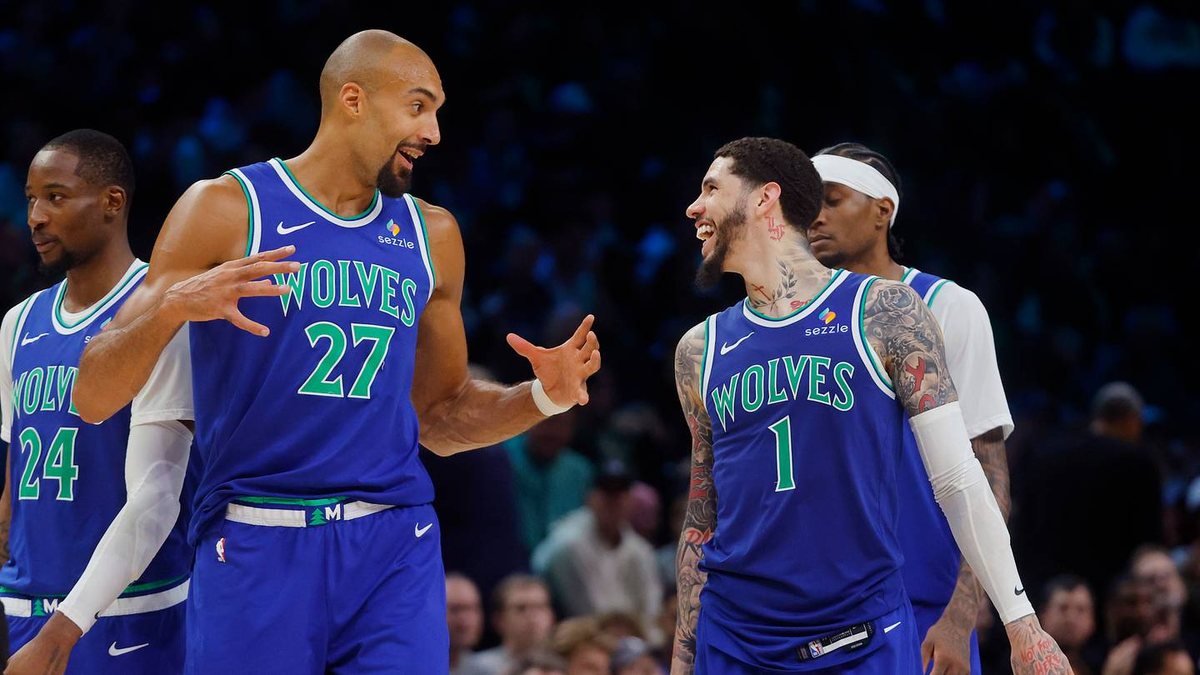
Here are Gobert’s minutes per game in each of his Minnesota seasons, from his Basketball Reference page:
| Season | Minutes per game |
|---|---|
| 2022-23 | 30.7 |
| 2023-24 | 34.1 |
| 2024-25 | 33.2 |
| 2025-26 | 31.3 |
| 2026-27 | 29.9 |
He’s 34, and I understand the instinct to save him for April. But look at 2023-24. He played 34.1 minutes, won Defensive Player of the Year, and Minnesota finished with the league’s best defensive rating, 109.0, per Basketball Reference’s 2023-24 league page. He made the All-Defensive first team again last season. This isn’t a player hanging on.
The minutes have gone elsewhere. Trey Lyles plays about a fifth of his own minutes at center, per Basketball Reference’s position estimates, and Beringer is at 16.4 minutes a night. Both of those are fine ideas when Edwards is healthy and the Wolves can outscore a leaky stretch. Without Edwards, the margin is thinner.
What it costs on offense
I don’t want to pretend Gobert is free. The Wolves score 115.5 points per 100 possessions with him on the floor and 120.2 without him. His free throws are the obvious problem: he’s 22 of 53 at the line, 41.5%, and I’ve argued that those free throws are the reason to wait on an extension. His offensive box plus-minus is -2.2.
But the trade isn’t close. Gobert costs the offense 4.7 points per 100 possessions and saves the defense 16.0. That’s a +11.2 swing in net rating. In Houston, Alperen Şengün went 0-for-9 with Gobert on the floor while Gobert’s box score said eight points. His scoring line has looked ordinary all season. The on-off numbers above say what he’s worth.
He’s also paid like the centerpiece of the defense, at $36.5 million this season, with a $38 million player option for next season. The full Wolves roster and contract guide has the rest of the cap sheet.
How Finch should do it
Edwards is out with the right knee injury that Shams Charania of ESPN said would cost him up to two months, per the injury report on the Wolves’ Basketball Reference page. That’s a long stretch to ride a defense this good, and the schedule makes it easy to plan. The Wolves host Dallas tonight, Chicago on Saturday, Portland on Monday and Tuesday, and the Knicks next Thursday.
The Portland back-to-back is the place to manage Gobert. Play him normal minutes in one of those games, lighter in the other. The rest of the way, I’d push him to 32 to 34 and trim the backup center minutes to 12 or 14. Beringer still plays and still learns. He just plays a bit less of the game.
Tonight is the first test. Cooper Flagg came in making 83.3% of his shots within three feet, and I argued in my preview that the Wolves should make Flagg settle for floaters by keeping Gobert between him and the rim. That plan works for 30 minutes. It would work better for 33.