
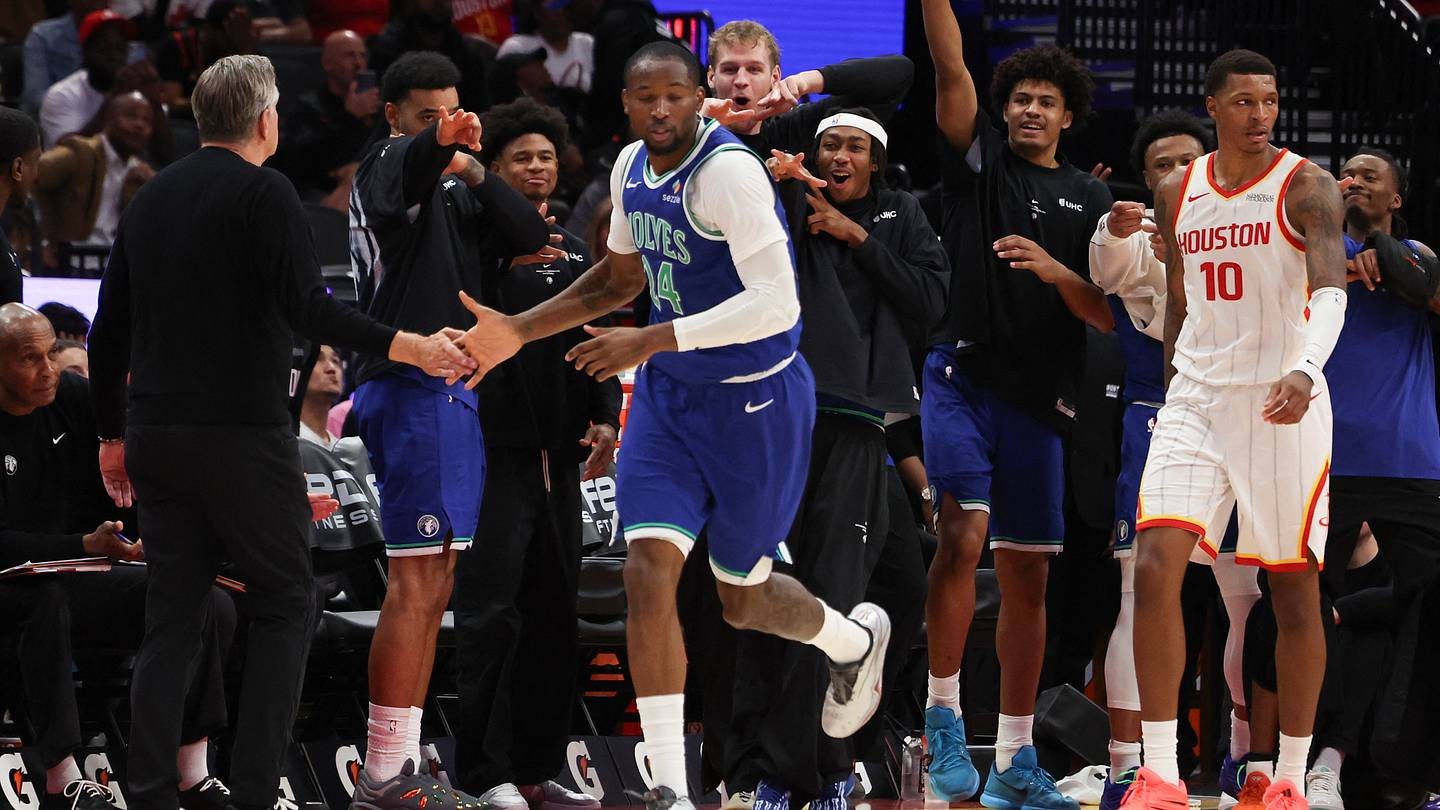
Jonathan Kuminga collected eight rebounds against Dallas on Thursday, November 12. Every one came on the defensive glass. In his previous game, against Utah on November 8, he collected none, according to Basketball Reference. That swing is the next part of his Timberwolves role I want Chris Finch to address.
As of Saturday, November 14, my demand for Kuminga is a steadier rebounding floor. Minnesota should expect him to help finish defensive possessions even when he isn’t scoring or producing a steal. Eight boards is a good night. Zero in more than 25 minutes should lead to a much harder conversation than the final score does.
The good nights are becoming a pattern
The encouraging part is how often Kuminga has already shown he can do this. His Basketball Reference game log lists six games with at least eight rebounds in his first 12 appearances. Those games include very different scoring returns.
Against Milwaukee on November 2, he scored eight points and grabbed 10 rebounds, eight of them defensive. He followed that with eight total rebounds in Houston and eight in New Orleans, including six defensive boards in each game. Then came the empty Utah line, followed by eight against Dallas.
| Date | Opponent | Defensive rebounds | Total rebounds |
|---|---|---|---|
| November 2 | Milwaukee | 8 | 10 |
| November 4 | Houston | 6 | 8 |
| November 6 | New Orleans | 6 | 8 |
| November 8 | Utah | 0 | 0 |
| November 12 | Dallas | 8 | 8 |
Source: Basketball Reference’s Kuminga game log, read November 14, 2026.
That adds up to 34 rebounds over those five games, 28 on defense, per the same game log. The pattern gives Finch a reasonable standard to coach toward. Kuminga has put together enough productive rebounding nights that asking for regular participation on the glass shouldn’t require a wholesale change to his game.
Milwaukee is the example I would keep showing him. Basketball Reference credits him with four blocks that night, too. The blocks and rebounds can coexist. Minnesota should want the possession-ending work alongside the spectacular play, rather than treating one as compensation for the absence of the other.
Utah is the line I would challenge
Kuminga played 25:27 against Utah, per Basketball Reference. He finished with four points and no rebounds, assists, steals or blocks. Against Dallas he played 24:26 and produced 14 points, eight rebounds, five assists and two steals.
Those minutes make it difficult to dismiss the contrast as a question of court time. He had slightly more time against Utah. I would ask what kept him out of the rebounding action and whether his assignment needed adjusting before accepting that line as an ordinary quiet night.
A rebound total cannot tell us whether a player boxed out well. It cannot tell us how often a teammate collected the ball because he occupied an opponent, either. I wouldn’t turn zero rebounds into an accusation that Kuminga stopped trying. I would turn it into a reason to examine where he was when the shots went up.
That distinction should shape the coaching response. The instruction I want is concrete: locate the nearest rebounding threat, make contact when the matchup allows it and pursue the ball when it enters his area. A demand to “be more active” gives him less to work with than an assignment he can execute after every shot.
This also wasn’t his only low total. The same log shows one rebound in the Miami opener and one against the Clippers on October 30. By my count, three of his first 12 appearances produced one rebound or fewer. The floor needs attention even while the better nights deserve praise.
Keep the defensive job connected to the next possession
Our earlier case for Kuminga’s low-turnover role and corner threes concentrated on how he fits into the offense. Rebounding offers a way for him to participate before Minnesota even has to call a play.
I want a simple sequence: help force the miss, secure the ball, find an outlet. If a teammate has the rebound covered, Kuminga can prepare to receive the next pass. If the ball is loose in his area, securing it should take priority over releasing upcourt and hoping somebody else finishes the work.
That is how I would connect the defensive assignment to his offensive opportunities. A clean rebound can start a possession against a defense that is still getting organized. There is no need to promise a fast break every time. Giving the next ball-handler a secure outlet is already useful.
The Wolves roster and depth chart provides the broader rotation context. My preference is to make this responsibility explicit for Kuminga regardless of which center shares the floor with him. Playing beside Rudy Gobert should give him a partner in finishing possessions, without making the glass somebody else’s department.
Judge the habit, then the total
I raised Kuminga’s lack of defensive rebounds after his four-steal debut in Miami. The difference now is that he has supplied several clear examples of the production I wanted. Finch can point to actual games rather than an imagined version of the player.
I wouldn’t set eight rebounds as a nightly quota. Opponents make different numbers of shots, rebounds bounce in different directions and defensive assignments affect where a forward can stand. A useful standard would be visible involvement after the shot: find an opponent, contest the space and stay available until Minnesota controls the ball.
That should also influence how Finch judges a poor shooting night. The Milwaukee line shows the value Kuminga can bring with eight points. Utah shows why accepting a smaller offensive role cannot be the whole job description. Minnesota needs work from him that survives a night when the scoring disappears.
Keep the eight-rebound nights coming. Make the near-empty ones much harder to accept.