
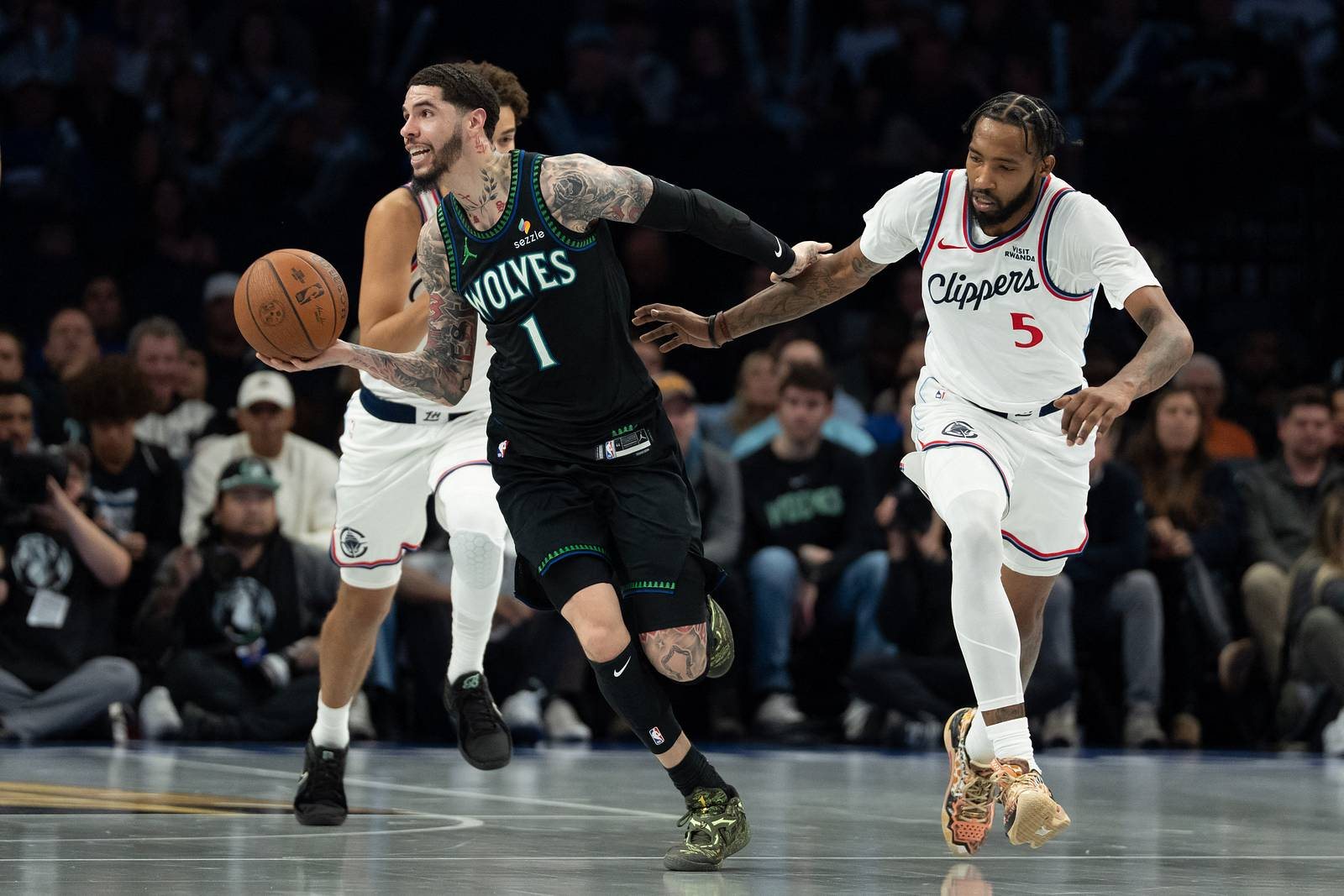
Utah turns the ball over 17.8 times a game, tied with Brooklyn for the fourth-most in the NBA, and its opponents average 10.0 steals a game, second only to the Clippers’ opponents, per Basketball Reference’s league page. The Jazz come to Target Center on Sunday at 1-8, after seven straight losses.
Chris Finch pointed at the Wolves’ answer on Friday night. “I really am proud the way he’s competing at the other end of the floor,” he told DAZN about LaMelo Ball, per Jon Krawczynski. My take for Sunday: the Wolves, with Ball’s hands leading the way, should turn Utah’s sloppy possessions into a running game. That’s how a team without Anthony Edwards gets easy points, and it’s the thing they didn’t do in New Orleans.
Utah gives the ball away
It happens most nights. The Jazz have committed 18 or more turnovers in six of their nine games, per their game log. The last two were 22 at New Orleans and 21 at Dallas. Their turnover rate is 15.3%, the fifth-highest in the league.
Keyonte George is the center of it. He’s averaging 21.3 points and 6.2 assists, and he’s also turning it over 3.9 times a game, per the Jazz’s Basketball Reference page. He had five in Friday’s 112-100 loss in Dallas. Isaiah Collier, the backup point guard, is at 2.1 turnovers in 15.6 minutes. When either one has the ball, the Wolves should crowd him.
I’ll be fair to Utah on one point. Basketball Reference rates the Jazz schedule the toughest in the league so far, and they’ve played San Antonio, Memphis and New Orleans twice each. They’re not as bad as 1-8. But the turnovers travel. A tough schedule doesn’t explain 22 giveaways in New Orleans.
Ball’s hands are real
Ball has 17 steals in 10 games, 1.7 a game, the best of any Wolves player who’s healthy right now, per his game log. Edwards averaged 2.0 in his four games before knee surgery. Ayo Dosunmu and Jonathan Kuminga are at 1.2, and Jaden McDaniels is at 0.9. Ball has recorded at least one steal in nine of 10 games.
The exception was Friday. Ball had none in New Orleans, and the whole team had five steals, its lowest total of the season, per the Wolves’ game log. The Pelicans scored 30 fast-break points to Minnesota’s 10, per ESPN’s box score. I wrote this morning that the free-throw line won that game. The fast breaks were nearly why they lost it.
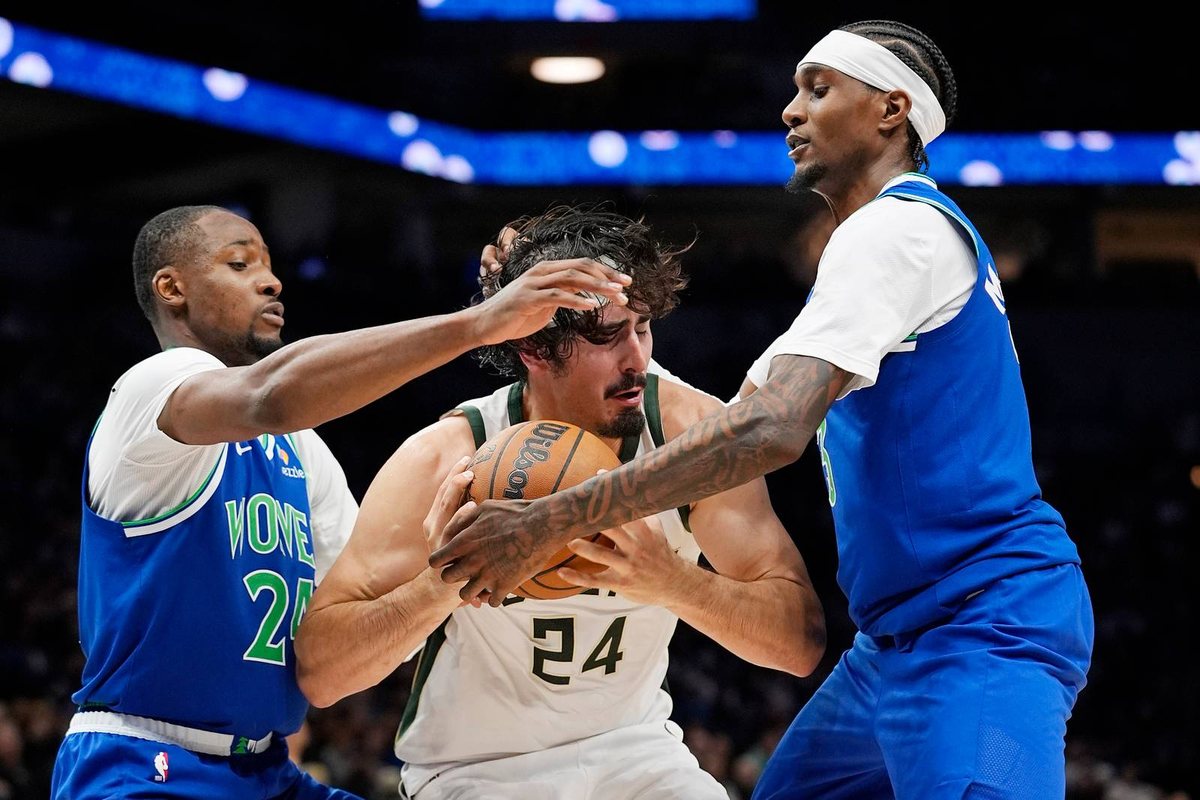
The Wolves force turnovers. They don’t run off them enough
Minnesota’s defense is tied with Philadelphia’s for second-best in the league by Basketball Reference’s defensive rating, at 106.6 points per 100 possessions. Opponents give it away 16.7 times a game against the Wolves, 10th-most in the league, per the Wolves’ Basketball Reference page.
The problem is what comes next. By my count from ESPN’s box scores, the Wolves are averaging 14.0 fast-break points a game. Their best night was 20 in San Antonio. They’ve scored more in transition than their opponent in only half of their 10 games, and they’ve allowed 18 or more four times.
Utah gives those points up. Jazz opponents are averaging 15.9 fast-break points a game across their nine games, by the same count, more than the 14.1 Wolves opponents are getting. San Antonio got 26 against Utah on November 2. A steal and a sprint is the easiest shot there is.
Compete, don’t reach
There’s a catch. Ball has 41 fouls in 10 games, including six in the loss at San Antonio. I wrote in October that his four fouls a night were a problem the blowouts hid. Finch praised him for competing. The steals I want come in passing lanes, where Ball reads George’s next pass. Swiping at the dribble just sends Utah to the line.
Let McDaniels and Kuminga handle George at the point of attack, and let Ball roam a step off his man.
The other half of the job is protecting the ball on the way back. Ball turns it over 3.9 times a game. Utah doesn’t force many, with an opponent turnover rate of 12.4%, fifth-lowest in the league, and only 6.8 steals a game. So the Wolves should get clean possessions of their own.
What I’ll be watching
Tip is 6 p.m. Central at Target Center, on DAZN. It opens the eight-game homestand I flagged on the schedule, and the Wolves come in 7-3 on a three-game winning streak. Utah is without Jaren Jackson Jr. (torn MCL) and Jusuf Nurkić (foot). Lauri Markkanen made eight threes and scored 24 in Dallas, and he’s the one I’d stay home on. For who’s left on the depth chart, see the full Wolves roster guide.
My number is 18 Utah turnovers. The Jazz have hit it in six of nine games. If the Wolves get there and score 20 fast-break points for the first time since San Antonio, they win their fourth straight. If Ball has more fouls than steals, they’ll have made a bad team’s night easier than it needed to be.